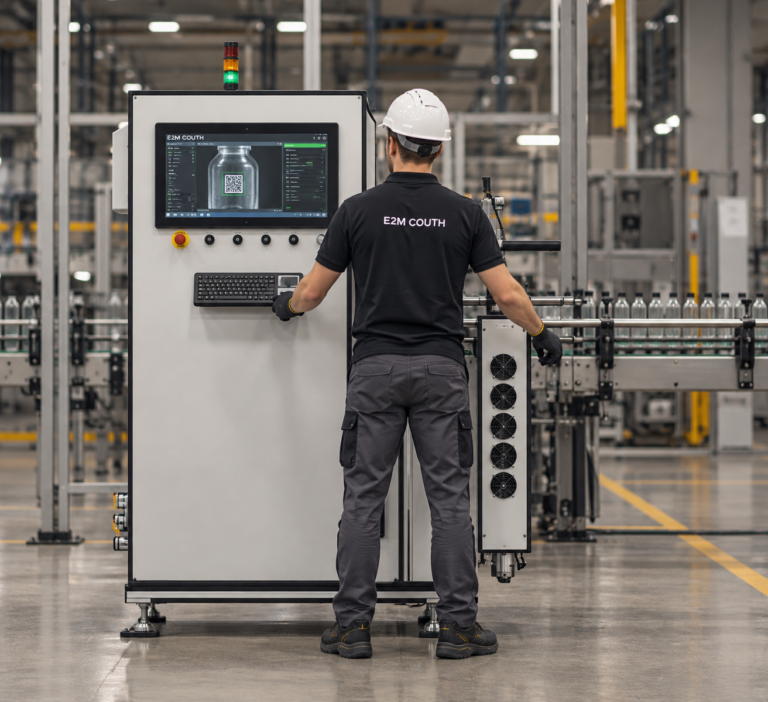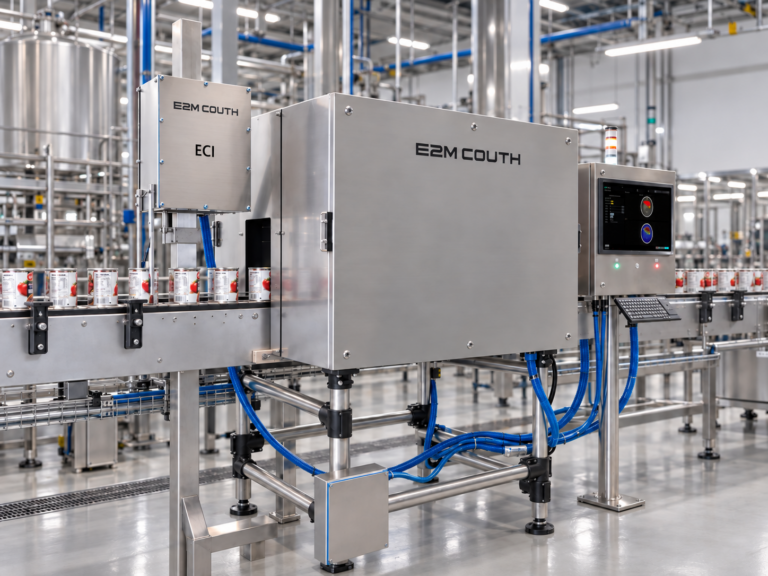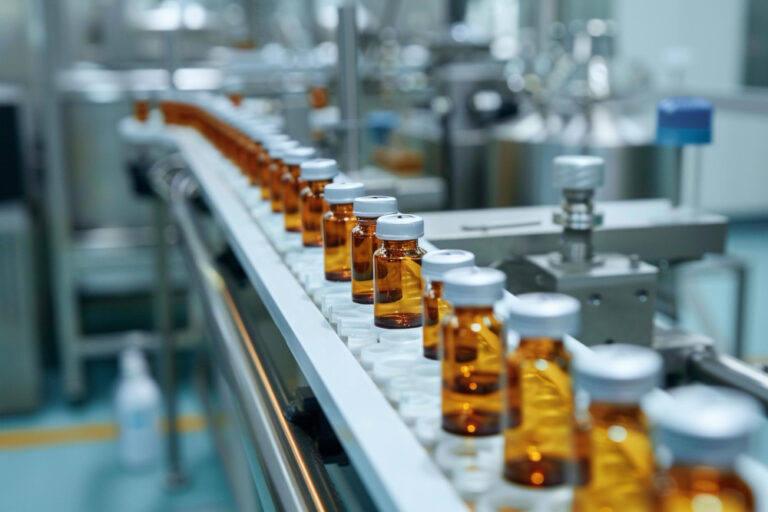
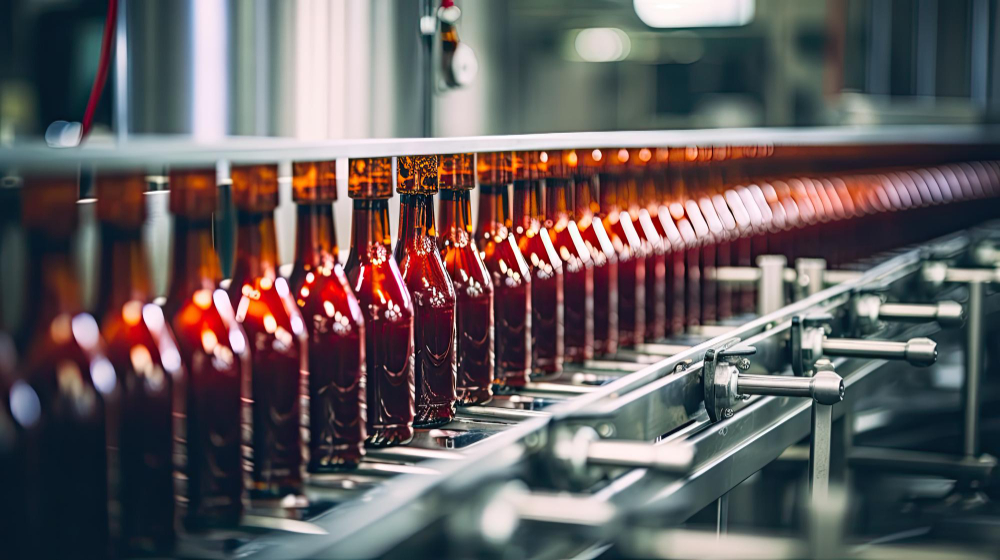
At E2M COUTH, we develop vision systems for bottling lines that help manufacturers maintain product quality without compromising production speed. In automated environments, every stage of the line must work together to ensure reliable inspection, accurate traceability and efficient handling while reducing waste and unnecessary downtime.
From bottle inspection and orientation to rejection, marking, case packing and palletizing, each process plays a critical role in overall line performance. In this article, we follow the bottle through the complete production process to explain how our inspection and automation solutions support consistent quality, improve operational efficiency and strengthen automated quality control in packaging.
What equipment does a bottling line need?
A modern bottling line needs more than isolated machines. To achieve consistent quality, reliable traceability and stable throughput, each stage must work as part of a coordinated process. At E2M COUTH, we approach bottling line automation as an integrated sequence in which every system prepares the bottle for the next operation.
The process typically begins with bottle inspection, where vision and other control technologies verify key parameters such as labels, fill level and caps. From there, bottles may need to be correctly oriented before labeling, marking or other downstream operations. If a defect is detected, an automated rejection system removes or diverts the non-conforming container without interrupting production. Marking then adds essential traceability information, such as batch or date codes. Finally, case packing groups approved bottles for handling, while palletizing prepares finished cases for storage and distribution.
By connecting these stages, we help create efficient vision systems for bottling lines that support automated quality control in packaging and reduce unnecessary manual intervention. This coordination also helps minimize bottlenecks, waste and avoidable downtime across demanding industrial production environments and packaging applications.
Bottle inspection
Bottle inspection is one of the most important stages of automated quality control in packaging because it allows us to identify non-conforming containers before they continue through the production line. In sectors such as beverages, food, chemicals, pharmaceuticals and cosmetics, a defect in the label, fill level or closure can affect product quality, traceability and overall line efficiency. Automated inspection therefore gives Production and Quality Managers a consistent way to monitor every bottle without relying exclusively on manual sampling.
At E2M COUTH, we use different inspection technologies according to the application and the characteristics of the container. Machine vision is particularly effective for visible features such as labels, codes, fill levels and caps, while low-level radio frequency can be used to inspect the fill level of opaque containers. Other technologies, such as X-ray, also exist in the wider inspection market, but the solutions covered here focus on the technologies we integrate into our own portfolio.
This approach to bottle defect detection helps identify problems in real time so that the line can act on them downstream. The objective is not simply to find defects, but to maintain stable production, reduce unnecessary waste and prevent non-conforming bottles from reaching later stages.
Bottle labeling
Labels play a key role in product identification, presentation and traceability, which makes their inspection essential before a bottle moves further through the line. A label may be present but still fail quality requirements because it is misaligned, incorrectly oriented, wrinkled, torn, lifted or otherwise damaged. Codes, lot information and expiry dates must also be readable and correct when they form part of the label.
For this stage, we offer Contourvision, our 360º label inspection system based on artificial vision. It can verify label position and integrity, inspect 1D and 2D codes, and check traceability information such as lot and expiry data. Because VisioInspect 2.0 inspects the container around its circumference, it supports comprehensive bottle inspection without requiring the bottle to be oriented specifically for analysis.
By automating these checks, we can reduce dependence on manual inspection while helping ensure that only correctly labeled products continue through the process.
Fill level
Correct fill level is another critical quality parameter. Underfilled bottles may fall outside established specifications, while overfilling can result in unnecessary product giveaway and higher production costs. For high-speed bottling line automation, checking this parameter consistently across production is therefore essential.
Our Visiolevel system uses machine vision to inspect fill level automatically and detect containers that are above or below the required range. It is designed for non-contact inspection and can be integrated into existing production environments.
When the container is opaque and conventional visual inspection is not the most suitable option, we offer InspectLevel RF. This autonomous system uses low-level radio frequency based on capacitive coupling to verify whether the product level falls within the specified range, without using ionizing radiation. Selecting the appropriate technology for the container allows us to improve inspection reliability while supporting continuous production and reducing avoidable waste.
Cap inspection
A correctly filled and labeled bottle can still become a non-conforming finished product if its closure is missing, incorrectly positioned or defective. Cap inspection therefore provides another important control point before the bottle moves to subsequent stages. Problems at this stage can lead to leakage, compromised sealing, contamination risks or avoidable product losses.
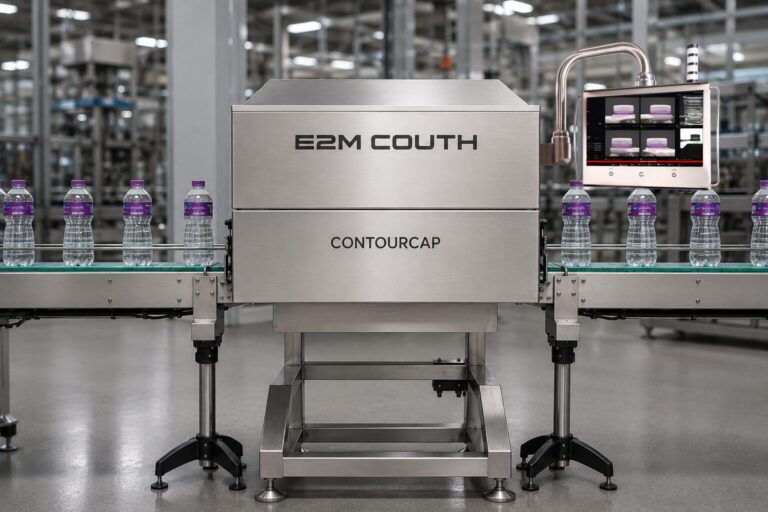
Our Visiocap system uses artificial vision to detect cap presence or absence, verify positioning and adjustment, and identify visible defects such as deformation, cracking or incomplete closures. For applications requiring inspection around the full closure, Contourcap provides 360º artificial-vision cap control.
Together, these inspection solutions allow us to check the characteristics that matter at different points in the bottling process. Once bottle defect detection identifies a non-conforming unit, however, the line also needs a reliable way to act on that information. This is where automated bottle rejection becomes the next essential stage.
Bottle orientation
Correct bottle orientation is essential whenever a downstream operation depends on the container reaching a precise position. In automated bottling lines, bottles may need to be aligned before labeling, marking or other processes in which the location of a specific feature, surface or reference point matters. Without reliable orientation, even an otherwise conforming bottle can cause application errors, inconsistent presentation, unnecessary rejects or interruptions that reduce overall line efficiency.
At E2M COUTH, we address this stage with Flexiturn, our automatic bottle orientation system. It is designed to detect the position of each container and rotate it into the required orientation before the next process begins. This helps us maintain repeatability while reducing the need for manual handling and supporting continuous production at industrial speeds.
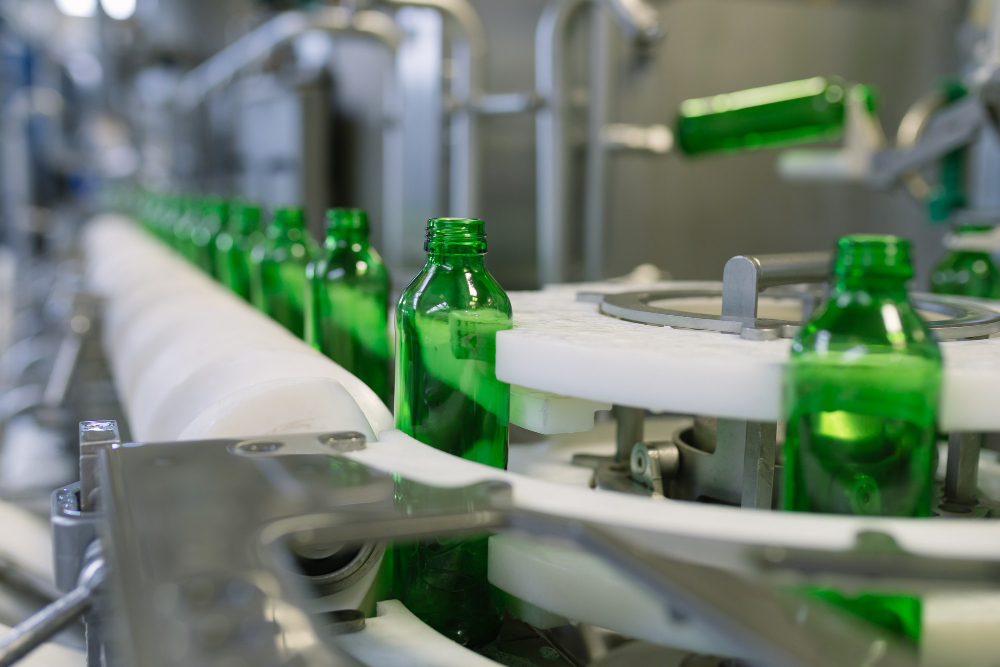
Bottle orientation also plays an important role in broader bottling line automation. When containers arrive consistently positioned, downstream equipment can operate under more stable conditions, helping reduce bottlenecks and avoid errors caused by incorrect alignment. For Production and Quality Managers, this contributes to a more predictable process and better coordination between machines.
By integrating orientation with inspection and subsequent operations, we help ensure that each bottle reaches the next stage in the correct position, ready for accurate marking, labeling or handling without disrupting production flow. This coordinated approach also supports smoother changeovers and greater consistency when handling different formats across demanding packaging environments.
Bottle rejection
Once an inspection system detects a non-conforming bottle, the line needs to respond quickly and reliably. Bottle rejection automates this step by removing or diverting the affected container without stopping production or disrupting the flow of conforming products. This connection between detection and action is essential for maintaining quality at industrial line speeds.
At E2M COUTH, we offer different rejection systems to suit the characteristics of the container, the line layout and the required handling method. Multistep is designed for controlled, stable diversion, while Proportional Rejection uses progressive movement to help maintain container stability during the rejection process. For suitable single-lane applications, Push Rejection provides a direct solution for removing defective products from the line.
Choosing the right bottle rejection method helps us reduce unnecessary stoppages, protect accepted production and minimize the risk of defective containers reaching downstream operations. It can also support different handling strategies, since a rejected bottle may require reinspection, reprocessing or removal depending on the detected issue. This flexibility is especially valuable when production formats, container shapes or rejection criteria change, as the system must continue operating consistently.
By integrating rejection with bottle defect detection, we create a more responsive approach to bottling line automation and automated quality control in packaging, helping Production and Quality Managers maintain consistent standards without sacrificing throughput overall.
Bottle marking
Once a bottle has passed inspection and orientation or rejection checks, marking becomes essential for traceability. Clear, durable codes help identify each product throughout production, storage and distribution, supporting quality control and batch management.
At E2M COUTH, we integrate laser marking solutions for applications that require reliable coding on packaging materials such as plastics, glass and metals. Depending on the application, our range includes Fiber, CO2 and MOPA laser technologies, allowing us to adapt the marking method to the material, production environment and required mark.
Bottle marking can include information such as batch or lot numbers, production dates, expiry dates and other identifiers needed for traceability. Because laser marking is a non-contact process, it can be integrated into automated production lines while maintaining legibility and reducing dependence on consumables.
For Production and Quality Managers, effective bottle marking strengthens process control and helps ensure that each approved product can be identified throughout its lifecycle. By integrating marking with the rest of the bottling line, we support continuous production, reliable traceability and a coordinated approach to bottling line automation.
Bottle case packing
After bottles have been inspected, oriented, marked and approved, case packing prepares them for handling, storage and distribution. At this stage, automation helps group products consistently, protect them during transport and keep the end of the line moving without unnecessary manual intervention.
At E2M COUTH, we provide automatic case packing solutions designed to adapt to different production requirements. Our portfolio includes intermittent and continuous wrap-around systems, as well as solutions for American or RSC-style cases. This allows us to match the packing method to the product format, line speed and packaging configuration.
For Production and Quality Managers, bottle case packing is not only a logistics step. Reliable packing helps maintain product integrity, reduce handling errors and prevent bottlenecks before palletizing. By integrating case packing with the rest of the bottling line, we support a more continuous and efficient production flow from primary packaging through to dispatch.
Bottle palletizing
Palletizing is the final stage in the bottle’s journey through the line, preparing packed cases for storage and distribution. At E2M COUTH, we integrate palletizing solutions designed to automate case placement and create repeatable pallet configurations.
Our palletizing portfolio allows us to adapt the solution to production requirements, payloads and line layouts. Automating this process helps reduce manual handling, improve consistency and prevent end-of-line bottlenecks that can affect throughput.
For Production and Quality Managers, bottle palletizing provides a reliable link between packaging and logistics. By coordinating palletizing with upstream case packing and inspection processes, we help maintain a continuous production flow while ensuring products are prepared for transport and dispatch.
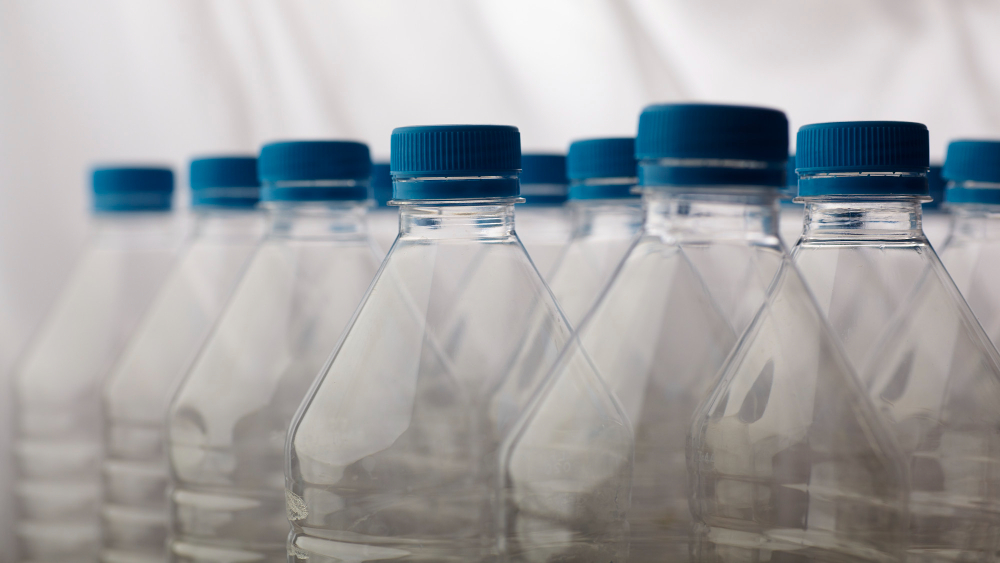
Integrated bottling line automation
From inspection and orientation to rejection, marking, case packing and palletizing, every stage contributes to a reliable bottling process. At E2M COUTH, we integrate vision systems for bottling lines and automation solutions that help manufacturers improve quality control, maintain traceability, reduce waste and protect production efficiency.
By connecting each stage around the needs of the line, we help Production and Quality Managers achieve consistent performance with less manual intervention. Contact us to discuss the requirements of your bottling line and identify the right automation solution.
Optimize your bottling line with E2M COUTH
A reliable bottling line depends on every stage working together, from inspection and orientation to rejection, marking, case packing and palletizing. At E2M COUTH, we develop and integrate solutions that help manufacturers strengthen quality control, improve traceability, reduce waste and maintain efficient production.
If you want to improve your bottling line automation or find the right vision systems for bottling lines, contact us. Our team will analyze your production requirements and help you identify the most suitable solution for your application.