
At E2M COUTH, we understand that pharmaceutical quality control does not end at a single inspection point. A reliable pharmaceutical inspection machine vision strategy must follow blister packs and vials throughout the production line, detecting defects, tracking each product and ensuring that non-conforming units are correctly rejected. In this article, we will follow both packaging formats from primary inspection through rejection, serialization, case packing and final palletizing. Along the way, we will examine how blister pack inspection and vial inspection systems can help production and quality managers maintain consistent standards, strengthen traceability and keep quality control integrated across every stage of pharmaceutical packaging.
Where pharma line quality control begins: Tracking products from the infeed
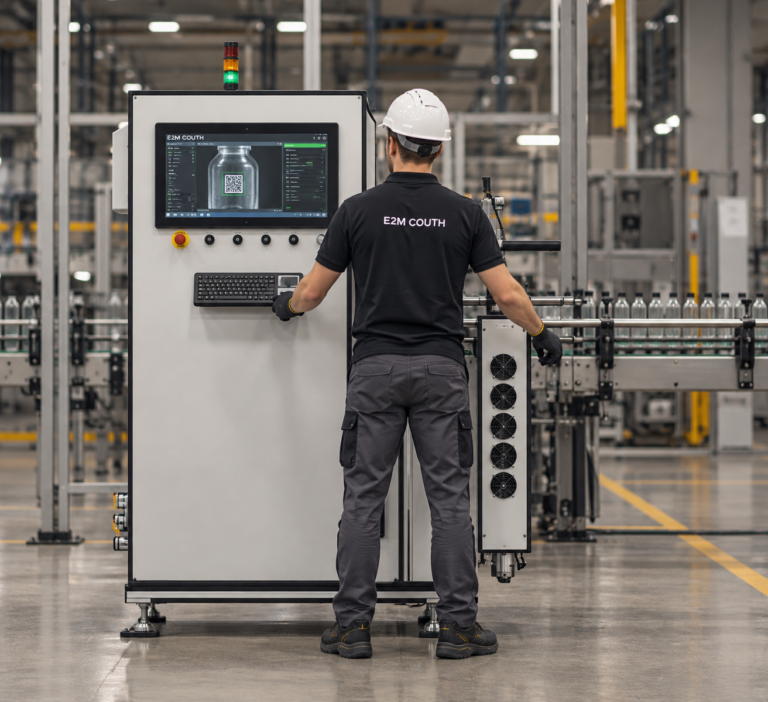
Effective pharma line quality control starts before the first camera captures an image. At E2M COUTH, we consider product handling, positioning and synchronization essential parts of the inspection process because every blister pack or vial must reach each control point in a stable and predictable way. From the infeed onward, we follow the product through the line so that inspection results remain connected to the correct unit.
Establishing the product flow before inspection
Blister packs and vials follow different primary packaging routes, but both require controlled movement through the production line. We must consider conveyor speed, product spacing, orientation and format changes when integrating machine vision systems. Stable handling helps cameras capture consistent images and enables inspection software to evaluate each unit under repeatable conditions.
This becomes especially important on high-speed pharmaceutical lines, where small variations in positioning can affect inspection reliability.
Building quality control around the complete process
We do not approach quality control as an isolated inspection station. Instead, we look at how every stage interacts with the next, from product detection to tracking, rejection and downstream packaging.
For production and quality managers, this means considering factors such as line speed, changeovers, inspection consistency, rejection rates and production interruptions. By maintaining visibility throughout the process, we can help ensure that each blister pack or vial continues through the line with its inspection status correctly associated with it.
Blister pack inspection and defect detection during primary packaging
Once blister packs enter the inspection stage, we focus on verifying that each pack meets the defined quality criteria before it continues through the line. A well-integrated blister pack inspection system allows us to check every unit consistently at production speed while keeping the inspection result linked to the correct pack.
What a blister pack inspection system needs to verify
The inspection requirements depend on the pharmaceutical product, packaging format and quality standards established for the line. We can configure machine vision to verify aspects such as product presence, correct positioning inside each cavity and visible irregularities affecting the contents or packaging.
Where required, the system can also evaluate printed information, markings or codes. This gives production and quality teams an automated method for identifying deviations that may be difficult to control consistently through manual inspection alone.
Common scenarios for blister pack defect detection
Effective blister pack defect detection begins with clearly defining which conditions should be considered non-conforming. Depending on the application, these may include missing products, incorrectly positioned units, visible product damage, packaging irregularities or printing inconsistencies.
Machine vision evaluates each blister pack against predefined criteria and identifies units that require further action. Our objective is not only to detect potential defects, but also to do so consistently enough to support stable production and reduce unnecessary rejects.
Connecting each inspection result with the next line stage
Detection is only one part of the process. Once we identify a non-conforming blister pack, we must ensure that its status remains associated with that specific unit as it moves downstream.
This tracking allows the line to distinguish between accepted and rejected packs until the appropriate action takes place. Conforming blister packs continue toward the following packaging stages, while defective units are directed toward the rejection process, maintaining continuity between inspection, product tracking and quality control.
How a vial inspection system follows each container through the line
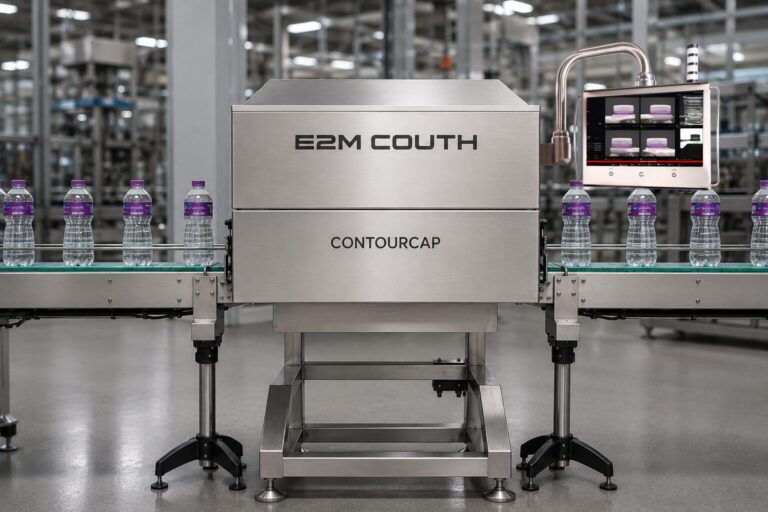
Once vials reach the inspection stage, we need to verify that each container meets the quality criteria defined for the production process. At E2M COUTH, we integrate the vial inspection system into the line so that every unit can be evaluated individually while moving at production speed. The aim is to detect deviations consistently and keep the inspection result associated with the correct vial as it advances downstream.
Inspection points for pharmaceutical vials
The checks performed depend on the vial format, the product and the requirements of the line. Machine vision can be configured to verify container presence and positioning, visible defects, closure elements such as stoppers or caps, and label or printed-code conditions.
Where the application requires it, the system can also evaluate visible fill-related characteristics. By defining clear acceptance criteria, we help production and quality teams automate checks that would otherwise depend heavily on manual observation.
Vial defect detection without slowing production
Reliable vial defect detection must work consistently without creating unnecessary interruptions. On high-speed lines, this means combining suitable image acquisition, stable product handling and inspection software capable of evaluating every vial within the available cycle time.
We also consider operational factors such as format changes, line speed and reject rates. The objective is to identify non-conforming vials accurately while allowing acceptable units to continue through production without avoidable delays.
Maintaining the identity of the inspected vial
Once a defect is detected, the system must continue tracking that specific vial until the corresponding action takes place. This connection between inspection and downstream handling is essential because the reject point may be located after the camera station.
By maintaining the status of each inspected unit, we can help ensure that the correct vial is removed while compliant products continue toward the next packaging stages. This creates a continuous quality-control flow from inspection through rejection and subsequent pharmaceutical packaging operations.
What happens after detection? The reject system for pharmaceutical packaging
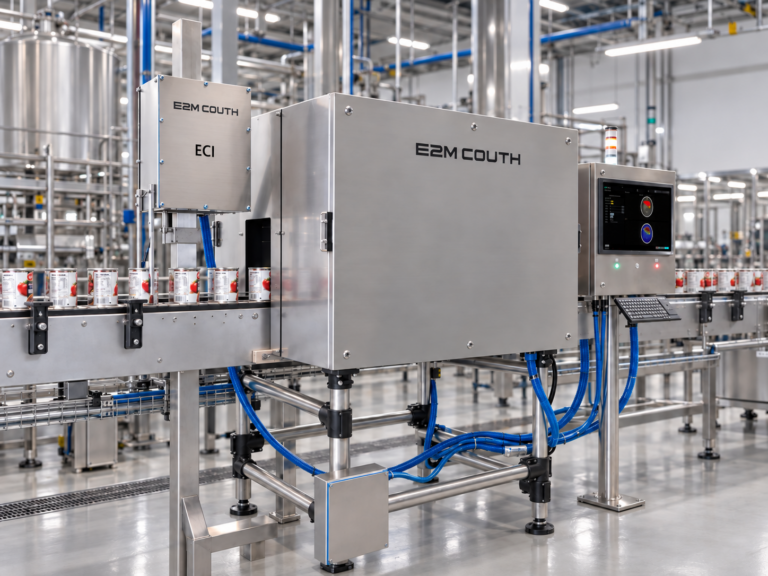
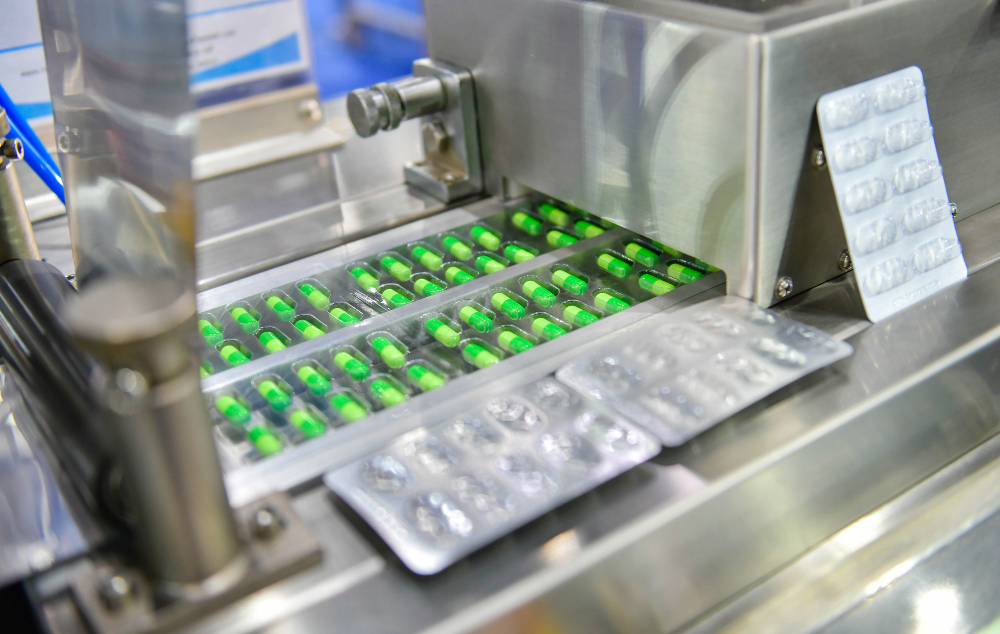
Once a blister pack or vial has been identified as non-conforming, the next step is to ensure that the correct unit is removed from the production flow. A reject system for pharmaceutical packaging must operate in coordination with the inspection equipment so that detection, tracking and rejection form part of the same quality-control sequence.
Turning a detection result into a controlled reject function
At E2M COUTH, we follow the affected product from the inspection point until it reaches the rejection position. This tracking is especially important when there is a physical distance between the camera and the reject device.
The sequence is straightforward: the system detects a defect, assigns the corresponding status to the unit, tracks its movement and activates the reject function at the correct moment. This helps prevent defective products from continuing downstream while compliant units remain in production.
Reject functions that support production control
Rejection equipment must do more than remove a product from the line. Its functions include separating non-conforming units from accepted products, confirming that the targeted unit has been removed and generating an alarm when the expected rejection does not occur.
By coordinating inspection data with precise reject functions, we can help production and quality managers maintain control over defective units, reduce unnecessary rejects and preserve product flow before serialization and secondary packaging.
DSCSA serialization and machine vision before secondary packaging
After inspection and rejection, compliant blister packs and vials move toward identification and secondary packaging. At this stage, DSCSA serialization becomes part of the broader quality-control flow. At E2M COUTH, we approach serialization as another point where machine vision can support verification, helping production teams confirm that the required codes are present, readable and associated with the correct product before packaging levels change.
Where does machine vision fit into pharmaceutical serialization?
Machine vision can be used to read and verify printed information, including machine-readable codes, as products move along the line. The objective is to confirm that the code can be captured reliably and that the product identity remains consistent with the information expected by the production system.
By integrating code verification with upstream inspection data, we can support a more connected process in which quality status and product identification travel together. This helps reduce the risk of a packaging stage progressing with unreadable, incomplete or mismatched information.
Keeping product identity connected as packaging levels change
Serialization becomes especially important when individual units are grouped into cartons, cases or other secondary packaging. As the packaging hierarchy changes, we need to preserve the relationship between the inspected product and its corresponding identification data.
For production and quality managers, this means treating serialization as part of end-to-end traceability rather than as an isolated coding task. By maintaining this connection, we can help ensure that accepted products continue downstream with verified identification, ready for case packing, aggregation and final palletizing while supporting consistent pharma line quality control.
Case Packing of Blister Packs: Moving from Individual Packs to Shipping Cases
Once compliant blister packs have passed inspection, rejection and serialization, they move into secondary packaging. During the case packing of blister packs, we shift from controlling individual units to monitoring grouped products as they are prepared for distribution. This stage must preserve product identity, packaging accuracy and traceability before sealed cases continue toward the end of the line.
What changes when blister packs enter secondary packaging
As individual packs are grouped, we need to verify that the correct products and formats enter the appropriate case. Machine vision can support checks related to printed information, labels, codes and case identification, helping production teams detect inconsistencies before the packaging process advances.
Maintaining the relationship between serialized units and their secondary packaging is also important for downstream traceability.
Connecting machine vision with case-packing equipment
At E2M COUTH, we integrate inspection, tracking and marking solutions with the surrounding packaging process to maintain continuity across the line. Rather than treating case packing as a separate operation, we consider how data from earlier stages can support control at this point.
This connected approach helps production and quality managers maintain consistent standards as products move from individual blister packs toward complete shipping cases and final palletizing.
Palletizing of Pharmaceutical Packaging and Final Traceability Checks
After case packing, products reach the final stage of the line. During the palletizing of pharmaceutical packaging, we focus on maintaining identification and traceability as individual cases become part of a complete shipment.
From cases to the finished pallet
Before cases are palletized, we can verify elements such as case identification, label presence and code readability. These checks help confirm that each case entering the palletizing process corresponds to the expected product and packaging configuration.
Why should quality control extend to the final packaging level
At E2M COUTH, we view end-of-line control as a continuation of the previous inspection stages. A product may pass primary inspection successfully while identification or packaging inconsistencies arise later.
By maintaining traceability through palletizing, we help production and quality teams detect exceptions before shipment and preserve quality control from the first inspection point to the finished pallet.
Bringing pharmaceutical inspection machine vision into one quality-control strategy
At E2M COUTH, we connect each stage of pharmaceutical inspection machine vision to create a continuous quality-control process.
Connecting every stage of the production line
From infeed and defect detection to rejection, serialization, case packing and palletizing, we track how each operation affects the next. This helps maintain consistent pharma line quality control throughout production.
Using inspection data to improve performance
By reviewing defect trends, reject rates, recurring issues and line interruptions, we help production and quality teams identify problems earlier and make more informed decisions across the entire packaging line.
From the first inspection to the final pallet
From the first blister pack or vial inspection to final palletizing, every stage contributes to pharmaceutical quality and traceability. At E2M COUTH, we integrate inspection, tracking, rejection, marking and downstream controls to help production and quality teams maintain a connected process. If you want to strengthen quality control across your pharmaceutical packaging line, contact us to discuss your application and identify the most suitable solution for your production requirements today.