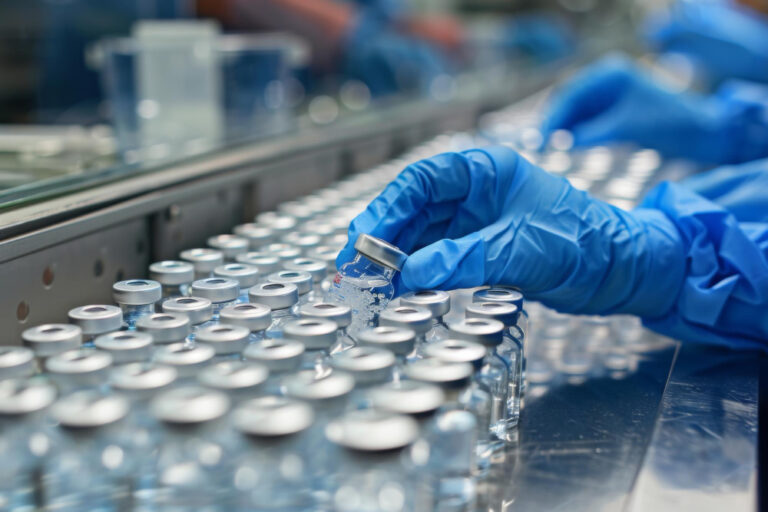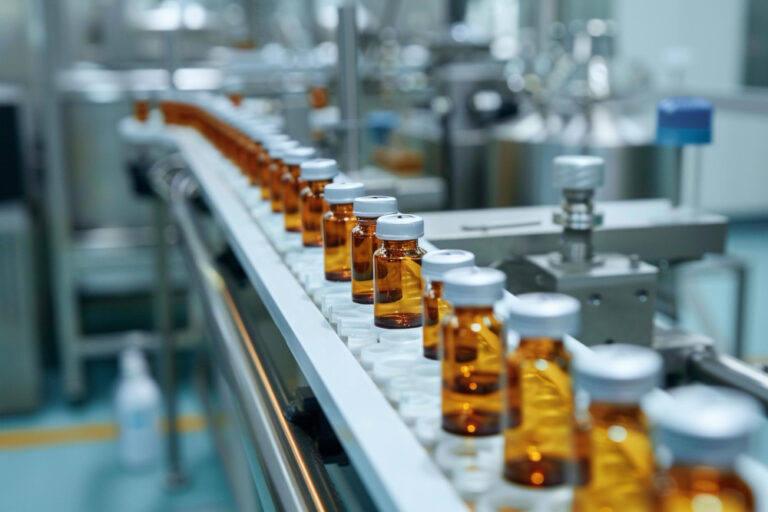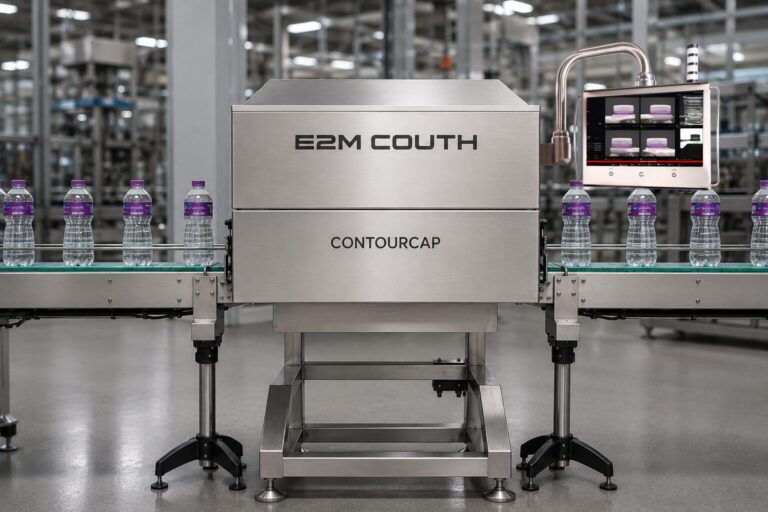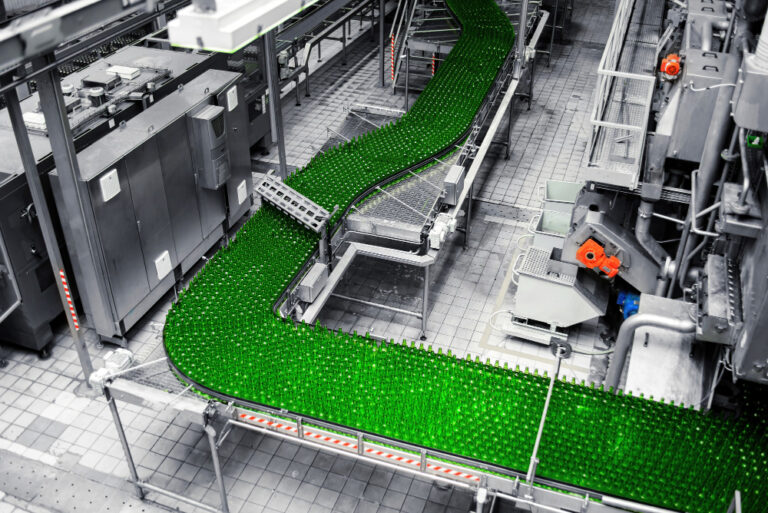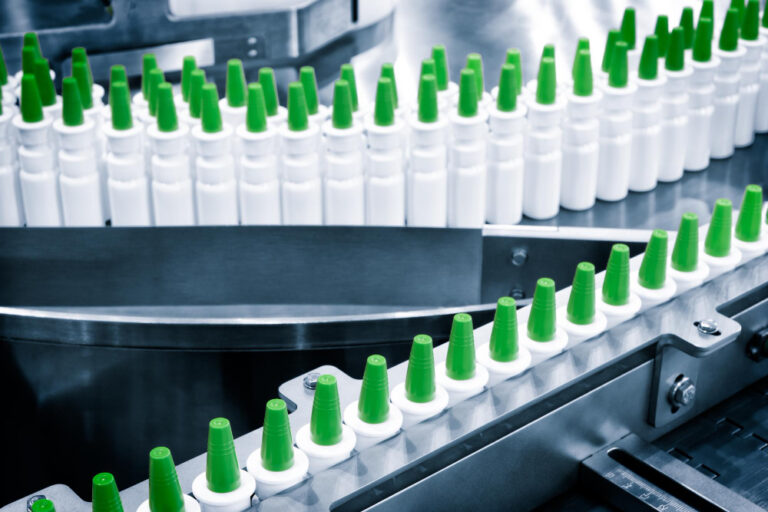
On a food, beverage, or canned goods production line, product control begins long before it reaches the end of the process. A can may exhibit defects before filling, during product filling, during sealing, or on its outer surface. Afterward, it is still necessary to correctly identify the can, verify its traceability, remove non-conforming units, and prepare the product for storage and distribution.
For this reason, an efficient production line should not be viewed as a series of independent machines, but rather as a coordinated process from the empty container to the finished product.
The combination of machine vision, rejection, laser marking, verification, case packing, and palletizing systems allows for the integration of quality control and automation across different stages of production, acting on each unit at the moment it adds the most value.
A Complete Line: Inspecting, Identifying, and Preparing the Final Product
A comprehensive solution for a can production line can be implemented in three main stages:
- Inspection and quality control, to check the container and the product and detect any potential deviations.
- Identification and traceability, to incorporate and verify the information needed to track the product throughout the process.
- End-of-line, to group, case, and palletize the product as required prior to storage or distribution.
The specific configuration will depend on the product, the type of can, the production rate, and the necessary controls.
It is not a matter of incorporating technology at every point along the line, but rather of determining what needs to be checked, where it should be done, and what action should be taken when a deviation is detected.
Can Inspection and Quality Control
Empty Can Inspection
The first inspection can take place even before product is added to the can.
Detecting an anomaly at this stage allows the can to be removed before product, time, and resources are expended in subsequent operations.
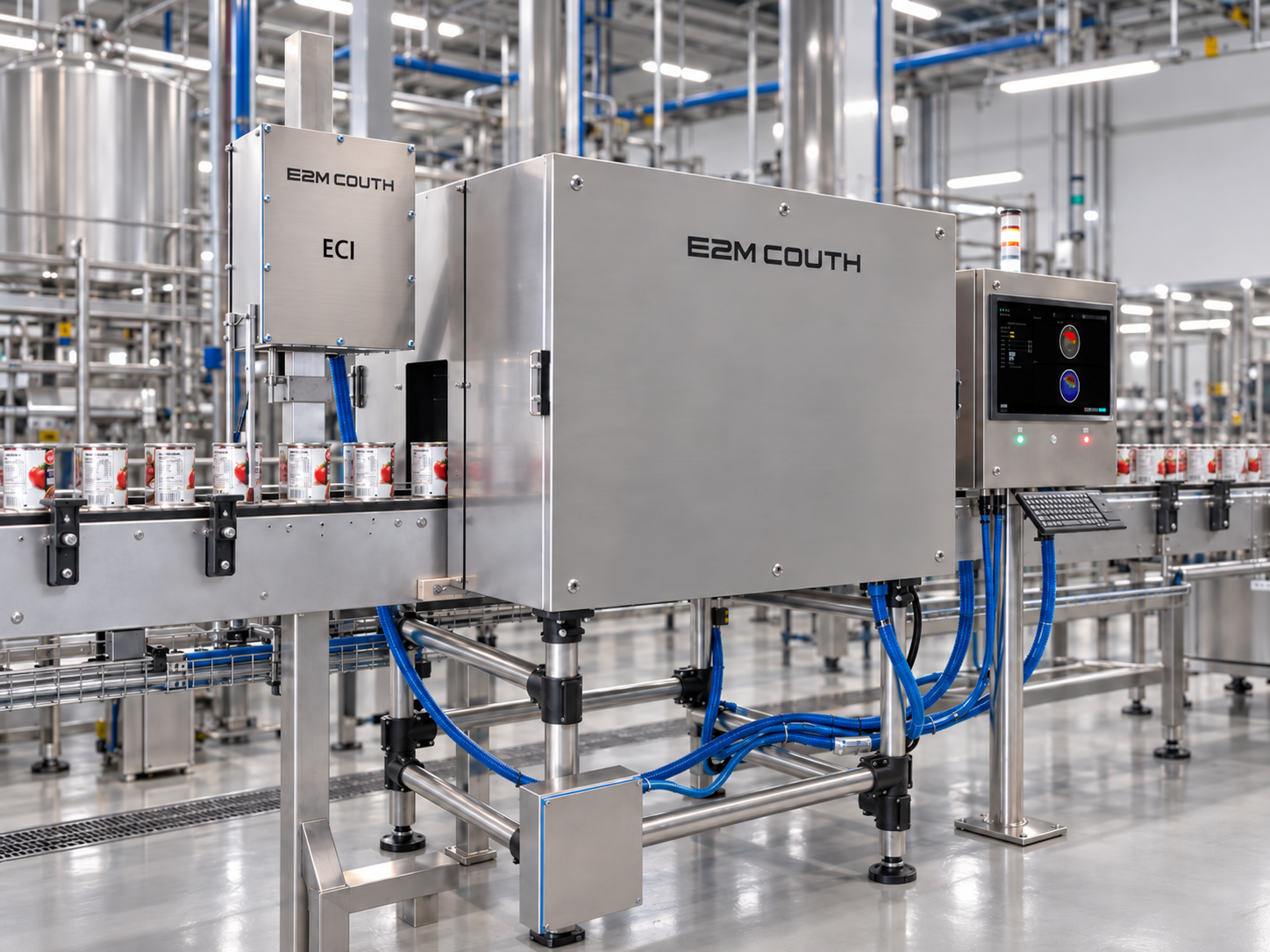
ECI — Empty Can Inspector— is specifically designed for inspecting empty cans and allows for the monitoring of various can characteristics, including specific areas of the sides, bottom, top flange, and interior.
Early inspection thus helps prevent a non-conforming container from proceeding to the filling stage.
Product Inspection Before Sealing
On certain food production lines, it is also necessary to inspect the contents of the can before sealing.
This phase is particularly important in the canned food industry, where the natural characteristics of the raw material can cause visual variations that must be distinguished from actual defects.
Contamination DL uses deep learning tools to analyze the contents and classify units according to established parameters.
Properly defining these criteria is essential not only for detecting non-conforming product but also for minimizing false rejects and avoiding the waste of good product.
Seal inspection
Once the container is sealed, another critical point in the process arises.
Visiocanend is designed for inspecting the seals on metal containers and enables checks related to double sealing, as well as verifications associated with codes and traceability.
Placing the inspection after sealing allows for the detection of potential issues before the product moves on to the next operations.
External Can Inspection
Impacts, dents, or deformations can also affect the conformity of the finished product.
VisioDents enables a 360° inspection of the can’s perimeter to detect dents and deformations. Its applications also include checking the position of the tab.
This type of inspection can be installed after processes in which the container may have been subjected to impacts or deformations.
From Quality Control to Automatic Rejection
Inspection generates data, but that data must enable decision-making.
When a system identifies a unit that does not meet the established parameters, it can be integrated with a rejection solution to remove it from the line without affecting the rest of the conforming product.
E2M COUTH offers various rejection technologies, such as Multistep, Proportional Rejection, and Push Rejection, which can be selected based on the type of container, its stability, and the application’s characteristics.
This establishes an automated sequence:
inspection → sorting → rejection of the non-compliant unit → continuation of production.
The goal is not to reject more product, but rather to identify and remove only those units that do not meet the defined criteria, while reducing false rejections.
Identification and Traceability via Laser Marking
Once the corresponding quality controls have been passed, product identification plays a fundamental role.
Traceability allows each package to be linked to information such as the batch, production date, expiration date, serial number, or other data used during manufacturing and distribution.
E2M COUTH’s laser marking systems enable the generation of codes, text, and variable information on different types of materials and packaging. The range includes fiber, MOPA, and CO₂ technologies, the choice of which depends on the material, the required contrast, and the application conditions.
On metallic, plastic, or organic surfaces, for example, the appropriate laser technologies can be used to incorporate permanent identification and traceability information.
Marking Without Stopping the Production Flow
On lines where the product moves continuously, stopping each unit for marking can become a bottleneck.
The Mark on the Fly —MOTF— solution synchronizes laser marking with the product’s movement to integrate this operation directly into conveyor lines. It can work with Fiber, MOPA, or CO₂ technologies depending on the application.
This allows the identification process to be incorporated into the production flow itself and enables the use of variable data when the application requires it.
Marking and Verification: Closing the Traceability Loop
Applying a mark does not necessarily mean the information is correct or legible.
Therefore, the process can be supplemented with vision systems that subsequently verify the generated information.
Verifytext enables the inspection of text and codes using machine vision, including applications related to laser marking.
This creates a more comprehensive process:
mark → verify → validate → continue production.
This combination allows traceability to be approached not merely as the creation of a code, but as a process in which the information must be verifiable afterward.
From Individual Packaging to End-of-Line
Once the cans have passed the corresponding inspections and have the required identification, the next step is to prepare the product for handling, storage, and distribution.
This is where end-of-line automation truly begins.
Automatic Grouping and Case Packing
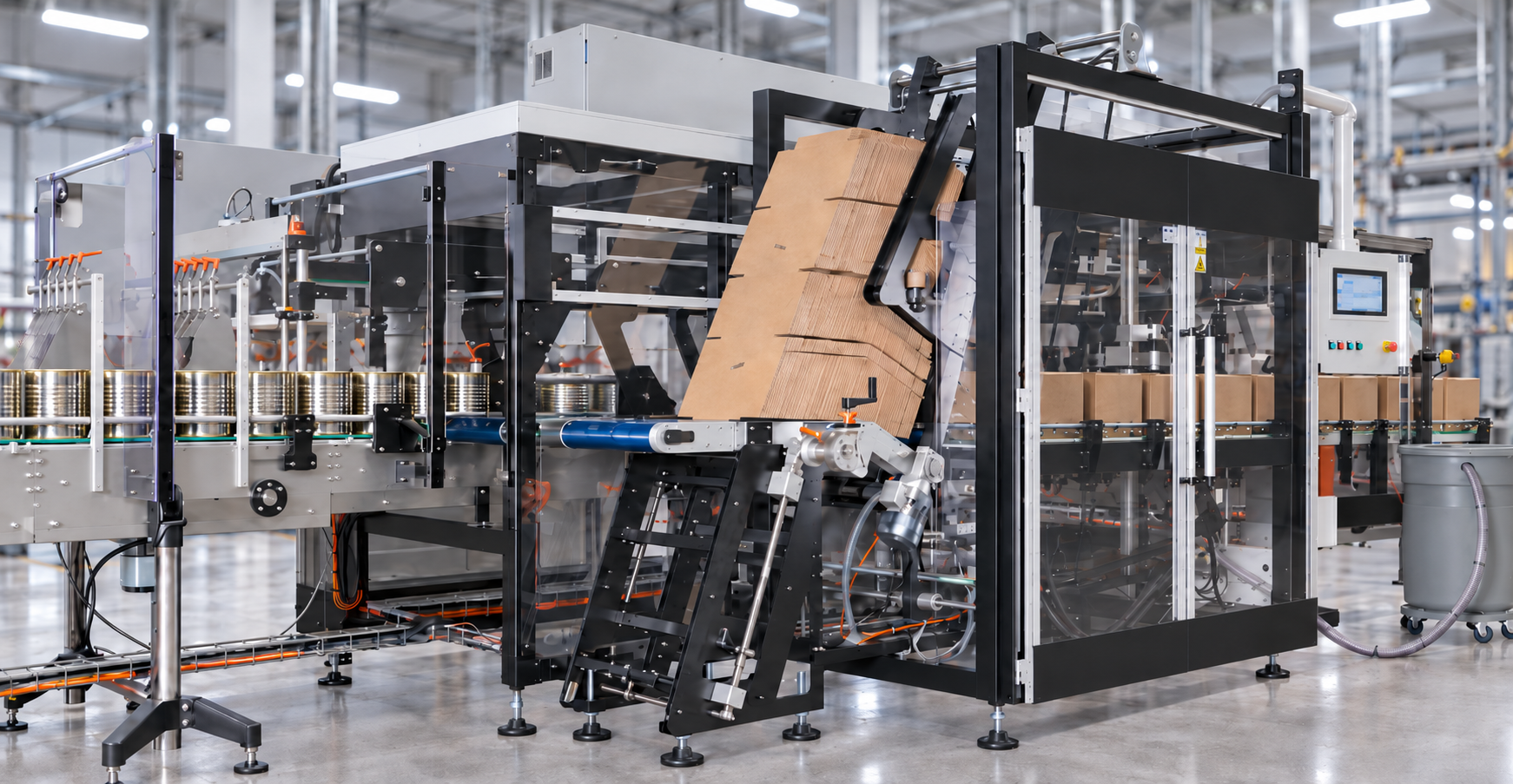
Case packing solutions allow products to be grouped and boxes to be automatically prepared for onward logistics.
E2M COUTH offers Wrap-Around case packers with different configurations depending on production needs.
The W100, for example, uses an intermittent operation divided into stations for product feeding, gluing, folding, and compacting. Its compact design is intended to integrate the case packing process into confined spaces and accommodate different products and formats.
For lines requiring a continuous process, the W250 handles the grouped product without stopping the flow during the folding, gluing, and compacting operations.
The system selection should be based on factors such as required production output, box format, product grouping, available space, and format changeover needs.
Palletizing the Finished Product
After case packing, palletizing completes the product’s journey through the line.
Palletizing systems allow boxes or packs to be arranged according to defined patterns to facilitate subsequent handling, storage, and transport.
The R200 Palletizing Robot from E2M COUTH is designed to automate this phase and incorporates features such as the Easy Layer layout editor, production control, and the integration of machine vision and traceability.
With this final operation, the journey that began with an empty can ends with a grouped and palletized product ready to move on to logistics.
What are the benefits of integrating inspection, traceability, and end-of-line operations?
Analyzing these operations as parts of a single process allows for addressing different production objectives.
Detecting defects as early as possible
The sooner a non-conforming unit is identified, the fewer additional operations are performed on it.
Detecting a defective can before filling, for example, prevents product from being added to a container that would later have to be rejected.
Maintaining traceability throughout the process
Marking allows information to be associated with the container or packaging, and vision systems can subsequently verify that this information is correct and legible.
Reducing false rejects and waste
Properly defining tolerances and inspection criteria helps distinguish acceptable variations from actual defects.
This is particularly relevant in the food industry, where raw materials may exhibit natural variations.
Automating downstream operations
Once the product is validated, case packing and palletizing operations allow the process to proceed automatically to the logistics stages.
Improving production continuity
Coordination between inspection, rejection, marking, and end-of-line operations helps prevent each process from functioning as an independent operation.
The goal is to maintain a continuous production flow in which each system acts on the product only when necessary.
What factors should be analyzed when designing a complete production line?
Each facility requires a specific study. Among the main factors that must be defined are:
- Can type, material, and format.
- Product characteristics.
- Defects to be detected.
- Stages at which inspections must be performed.
- Acceptance and rejection criteria.
- Production rate.
- Information to be marked.
- Material on which the marking will be applied.
- Verification and traceability requirements.
- Type of grouping and carton format.
- Case packing system.
- Palletizing configuration.
- Anticipated format changes.
- Available space.
- Integration with existing machinery and automation.
- Data exchange and management requirements.
Jointly defining these elements allows the process to be designed based on actual production needs, rather than as a retroactive combination of independent equipment.
A Comprehensive View of the Can Production Line
From the entry of the empty can to the formation of the final pallet, each stage serves a different function within the process.
Machine vision enables the detection and classification of deviations.
Rejection systems allow for action to be taken on non-conforming products.
Laser marking and verification enable product identification and tracking.
Case packing and palletizing solutions automate the final operations prior to storage and distribution.
The integration of these technologies allows the production line to be viewed as a connected process, where quality, traceability, and automation are carried out in a coordinated manner.