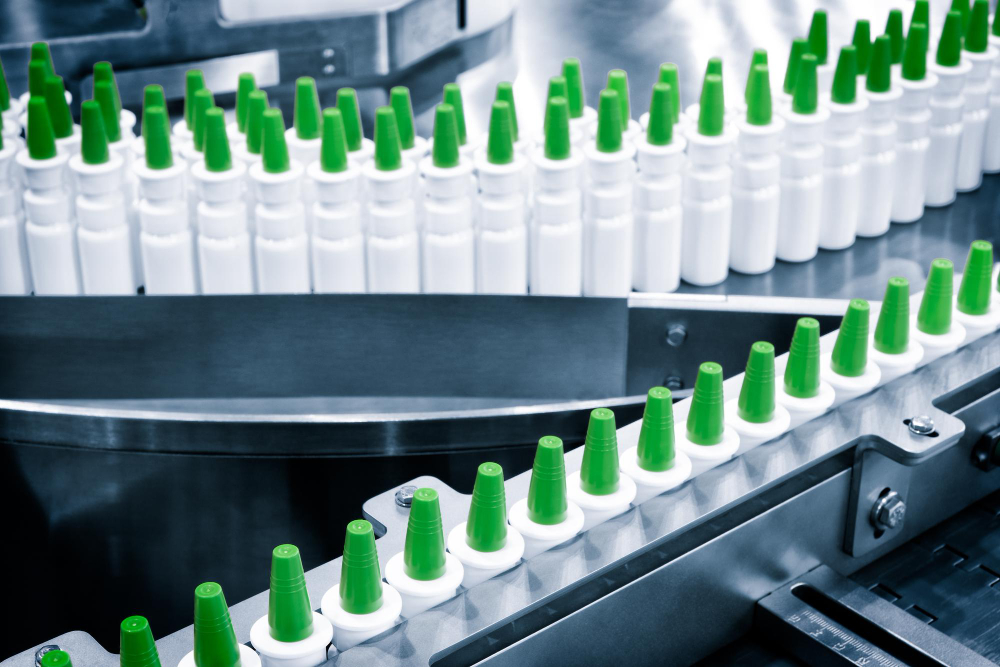
At E2M COUTH, we know that food traceability starts with a reliable mark. Lot codes, expiration dates, batch numbers, QR codes and Datamatrix codes connect each product to the information manufacturers need for control, distribution and recall management.
For decades, inkjet printing has been a common choice for product coding. But in demanding food and beverage environments, manufacturers increasingly need cleaner, more durable and lower-maintenance alternatives. That is why laser marking is replacing ink in many production lines: it creates permanent, precise codes on packaging or directly on the product, without inks, solvents or consumables.
What is product traceability in food packaging?
Product traceability is the ability to identify a product, lot or batch and connect it to the information generated during production, packaging, storage and distribution. In the food industry, this usually depends on visible codes that make each unit or package easy to track: lot codes, batch numbers, expiration dates, barcodes, QR codes or Datamatrix codes.
These marks are not just technical details. They are the physical link between the product and the traceability system behind it. If a code is missing, damaged or unreadable, the information may exist in the database, but the product becomes harder to identify on the line, in the warehouse or during a recall.
That is why marking quality is essential for food traceability. A clear and durable code helps manufacturers control batches, separate products, verify dates and respond faster when they need to locate specific units.
At E2M COUTH, we work with industrial marking systems designed to apply codes, text and images on different packaging materials. In food and beverage production, this allows manufacturers to support traceability from the moment the product is marked until it reaches distribution, sale or final consumption.
The goal is simple: every product must carry reliable information that remains readable when it matters most.
Why food traceability is becoming a bigger priority in North America
Food traceability is becoming a higher priority because manufacturers need to identify products faster, control risks more effectively and respond with greater precision when a quality or safety issue appears. In food and beverage production, the ability to locate a specific lot, batch or shipment can make the difference between a controlled action and a costly disruption.
Regulations such as the FDA Food Safety Modernization Act have also increased the focus on prevention, documentation and traceability across the supply chain. For manufacturers, this means that traceability can no longer depend only on internal records. The physical code on the product or packaging must be clear, durable and connected to reliable production data.
This is especially important in large-scale food and beverage traceability, where products move quickly through filling, sealing, labeling, packing, storage and distribution. If a lot code, expiration date or Datamatrix code cannot be read, the traceability chain becomes weaker.
At E2M COUTH, we see marking as a key part of that chain. A good code helps production teams verify information on the line, supports warehouse control and makes product identification easier throughout the lifecycle of the package.
For manufacturers in the US and North America, traceability is not just a compliance issue. It is also a way to protect consumers, reduce operational uncertainty and maintain confidence in every product that leaves the line.
Inkjet printing in food and beverage lines: why it became the standard
For decades, inkjet printing has been one of the most common technologies for coding products in food and beverage production. Its success came from a practical need: manufacturers had to print variable information at high speed without stopping the line.
A flexible option for fast-moving production
Continuous inkjet printing made it possible to apply lot codes, expiration dates, batch numbers and other identification data on many types of packaging. For companies managing high volumes, this flexibility helped support food and beverage traceability across bottles, cans, trays, boxes and flexible packaging.
Inkjet also became familiar to production and maintenance teams. Many plants already knew how to operate it, integrate it into existing lines and adapt it to different coding needs. That made it a standard option for product traceability in many facilities.
Why manufacturers are now reconsidering ink
However, the same technology that solved many marking challenges also created recurring operational demands. Ink-based systems depend on consumables, cleaning routines and regular maintenance. In demanding food environments, this can increase downtime, waste and handling of chemical products.
That is why many manufacturers are now evaluating alternatives. The goal is not only to print a code, but to create a durable, readable and cleaner mark that supports traceability with fewer interruptions.
The drawbacks of ink-based coding for food traceability
Inkjet printing has supported industrial coding for years, but it also brings challenges that can affect efficiency, hygiene and food traceability. In food and beverage lines, these drawbacks become more important when production speed, code readability and compliance control are critical.
The main limitations of ink-based coding include:
- Consumables: Inkjet systems require inks, solvents and cleaning products, which increase recurring costs and stock management.
- Maintenance: Printheads need regular cleaning to prevent blockages, poor-quality codes or unplanned stops.
- Waste: Cartridges, solvent containers and cleaning residues can add unnecessary waste to the production environment.
- Chemical handling: Ink-based systems involve liquids and chemical products that must be managed carefully in food facilities.
- Code durability: Ink marks can be affected by moisture, friction, temperature changes or handling, depending on the packaging material.
- Legibility risks: If a code fades, smudges or becomes unreadable, the product traceability process becomes weaker.
- Downtime: Maintenance tasks and consumable changes can interrupt production or reduce line efficiency.
For manufacturers, the issue is not only how to apply a code. The real challenge is keeping that code readable throughout the product lifecycle. When traceability information is compromised, quality control, warehouse management and recall procedures become more difficult.

The rise of laser marking in food and beverage traceability
Laser marking is gaining ground in food and beverage traceability because it responds to the main limitations of ink-based coding. Instead of applying ink to the surface, the laser creates a precise mark on the packaging or product material itself.
This makes the process cleaner, more stable and easier to maintain. There are no inks, solvents or consumables to replace, which helps reduce waste and simplifies daily operation on the production line. For manufacturers working in demanding food environments, that difference matters.
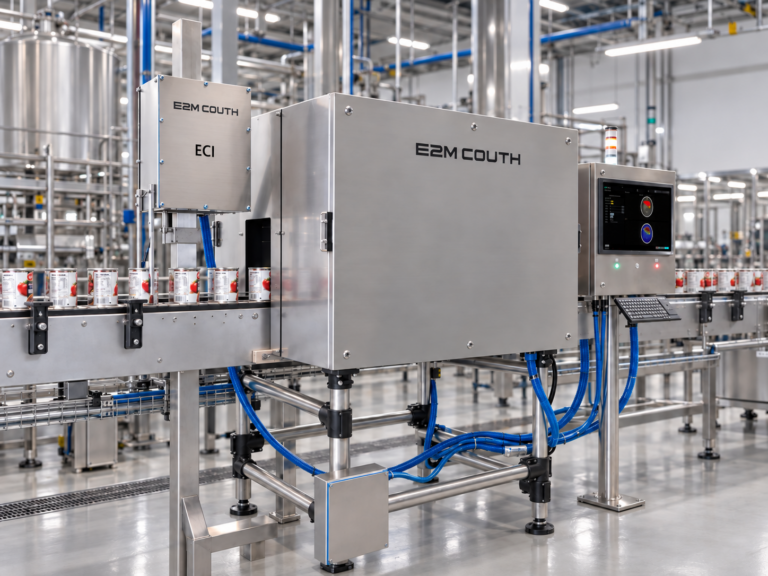
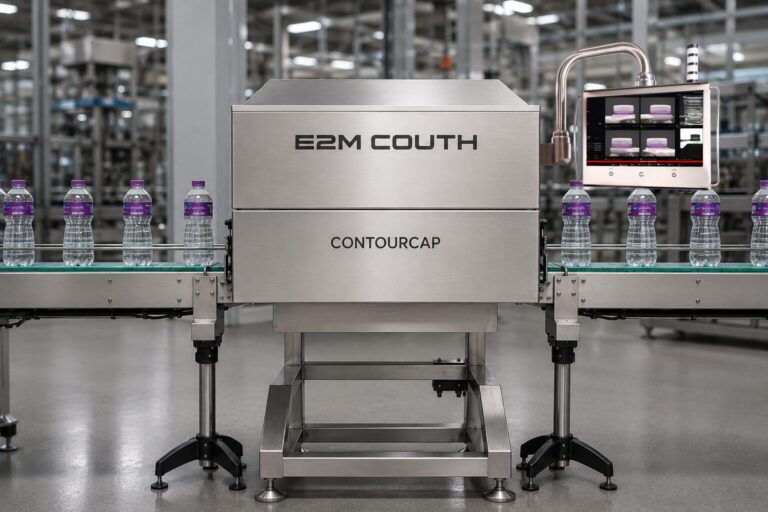
At E2M COUTH, we work with laser marking systems designed for industrial production lines where legibility, speed and reliability are essential. These systems can apply codes, text, logos and traceability data with high precision, helping manufacturers keep information readable throughout the product lifecycle.
Laser marking is also useful because it can adapt to different materials, depending on the application. In food and beverage production, this may include glass bottles, plastic packaging, metal cans, cardboard, coated materials or even certain direct product marking applications.
For food traceability, the benefit is clear: the code is not only printed, but permanently marked. That makes it more resistant to friction, handling, moisture and time, helping companies maintain control from production to distribution.
Why laser wins over ink for food traceability
Laser marking is replacing ink in many production environments because it offers a cleaner, more permanent way to code products. For food traceability, that means fewer risks linked to unreadable marks, smudging or consumable-related interruptions.
No ink, solvents or consumables
Inkjet systems depend on inks, solvents and cleaning products. Laser marking removes that dependency. There are no cartridges to replace, no ink storage to manage and no solvent use during the marking process.
This helps reduce waste and simplifies daily operation, especially in food and beverage plants where cleanliness and line efficiency are constant priorities.
Permanent and readable codes
A traceability code must remain readable after packaging, handling, storage and transport. Laser marking creates durable codes directly on the surface, which helps protect key information such as lot numbers, expiration dates, QR codes and Datamatrix codes.
That permanence strengthens product traceability because the mark stays connected to the product throughout its lifecycle.
Lower maintenance demands
Laser systems require less routine maintenance than ink-based equipment. With fewer consumables and fewer cleaning tasks, production teams can reduce interruptions and keep lines running more consistently.
Suitable for different materials
Laser marking can be used on many materials found in food and beverage traceability, depending on the system and application. These may include glass bottles, plastic packaging, metal cans, cardboard, coated materials and selected direct food marking uses.
For manufacturers, the advantage is not only technical. Laser marking supports a more stable, hygienic and efficient coding process. At E2M COUTH, we see this shift as a practical response to what modern production lines need: clear codes, fewer consumables and reliable traceability from line to market.
Where laser marking can be used in real food and beverage production
Laser marking can support food and beverage traceability in many everyday production environments. Its value comes from applying clear, durable codes on different packaging formats and, in some cases, directly on the product. Common applications include:
- Bottles: Lot codes, expiration dates, batch numbers and QR codes on glass or plastic bottles.
- Cans: Permanent production codes on metal surfaces for beverage, canned food or ready-to-drink products.
- Plastic packaging: Datamatrix codes, serial numbers and expiration dates on trays, tubs, lids or flexible packaging.
- Cardboard packaging: Readable marks on boxes, sleeves or secondary packaging used for logistics and warehouse control.
- Meat packaging: Lot codes and date information on trays, films or labels to support product traceability.
For manufacturers, each application has its own requirements: material, contrast, line speed, available marking area and code type. That is why the right laser system must be selected according to the production line, not as a generic solution. At E2M COUTH, we help assess these variables so the mark remains readable from production to distribution.
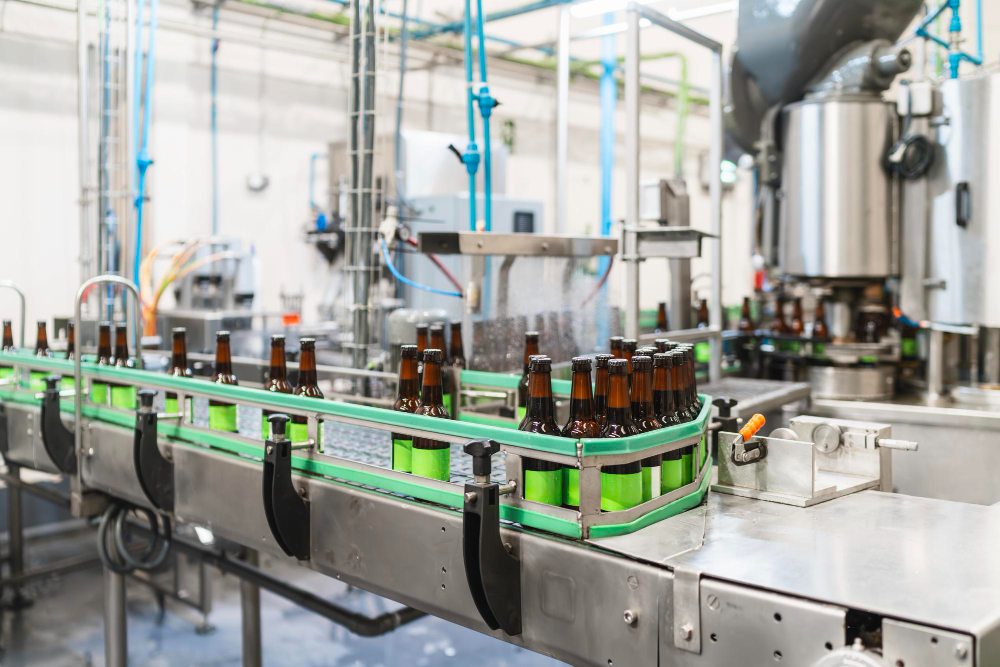
Mark On The Fly: CO₂, Fiber, and MOPA Laser Solutions
In modern food and beverage production, Mark On The Fly (MOTF) allows manufacturers to apply clear, permanent codes while products move along the line, ensuring accurate food traceability without slowing production. This technique is compatible with CO₂, Fiber, and MOPA lasers, each offering unique advantages depending on the material and marking requirements.
- CO₂ lasers work efficiently on cardboard, plastics, coated surfaces and certain organic materials, producing high-contrast marks suitable for packaging applications.
- Fiber lasers deliver durable, precise codes on metals, plastics, glass and ceramics, maintaining readability under handling and storage conditions.
- MOPA lasers provide flexible wavelength control, ideal for subtle marking on sensitive materials or when variable contrast and personalization are required.
Using MOTF, all three laser types can create lot codes, batch numbers, QR codes, Datamatrix codes and expiration dates without interrupting the production flow. This ensures that every package or product carries a reliable mark for product traceability.
At E2M COUTH, we help manufacturers choose the right laser technology and MOTF setup, aligning the system with line speed, material, code type and traceability requirements to maintain consistent, high-quality marking.
Strengthen food traceability with E2M COUTH laser marking solutions
Food traceability depends on codes that remain clear, durable and readable throughout the product lifecycle. Inkjet printing has played an important role in food and beverage production, but laser marking offers a cleaner and more stable alternative for modern lines.
By eliminating inks, solvents and consumables, laser systems help manufacturers reduce maintenance, improve code permanence and support more efficient product traceability. From bottles and cans to plastic packaging, cardboard and selected direct marking applications, the right laser system can strengthen control from production to distribution.
At E2M COUTH, we help manufacturers choose marking solutions adapted to their materials, line speed and traceability needs.
Contact us to find the right laser marking system for your production line.