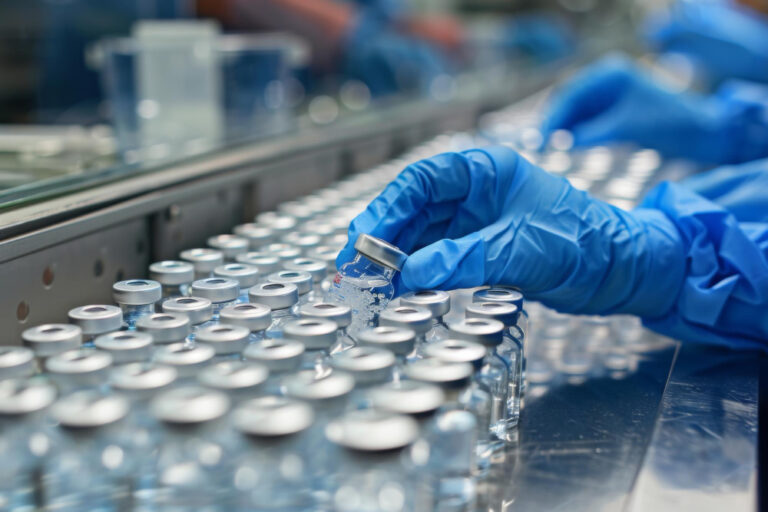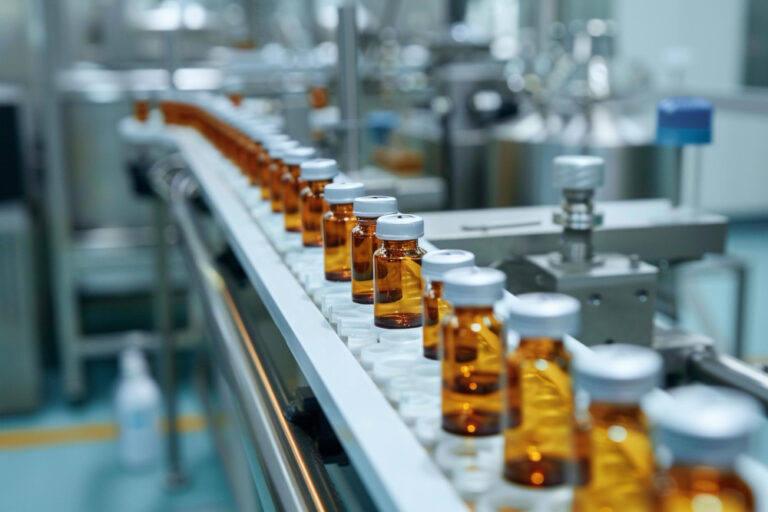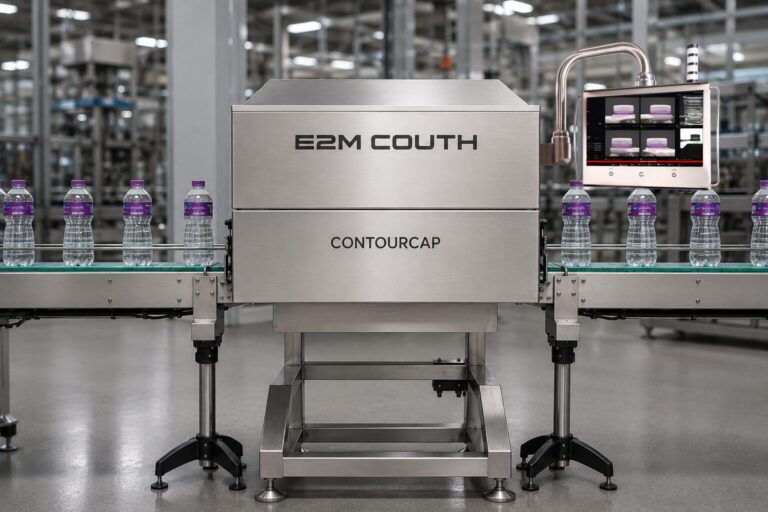

At E2M COUTH we know full well that precision in food product labelling is vital to guarantee safety, quality and regulatory compliance. A labelling error could compromise consumer trust, give rise to legal problems, and affect a brand’s reputation. Which is why we offer advanced labelling control systems, designed to maximise efficiency and reduce errors in the different process phases.
Our cutting-edge technology and focus on quality help companies comply with the most demanding regulations in the sector, ensuring that each product reaches the market with accurate and properly identified information.
The importance of precise labelling in the food industry
Precise labelling in the food industry is not only a legal obligation, but a vital cornerstone in guaranteeing consumer safety and transparency in product sales. Each label provides important information as to ingredients, nutritional values, allergens, expiry dates and other storage conditions, allowing consumers to reach safe and informed decisions.
Inaccurate or confusing labels could have serious consequences. Errors in the declaration of ingredients or allergens could endanger the health of consumers, above all those with food allergies or intolerances. Meanwhile, labelling errors could give rise to product recalls, fines and harm to the brand’s reputation, potentially affecting consumer trust and the viability of the business.
On globalised markets, labelling regulations change according to the country or region, making it hugely important to comply with such international standards as the Codex Alimentarius, the FDA in the United States, and European Union regulations. Having clear, precise and compliant labelling not only avoids legal problems, but also makes a company more competitive, by facilitating exports and distribution on different markets.
At E2M COUTH we fully understand the importance of precise labelling, and so offer advanced technological solutions to guarantee regulatory compliance, reduce error, and improve product traceability. Our commitment to quality and safety helps companies ensure that each product that reaches the consumer has the right information, generating trust and allowing them to stand out in the marketplace.
Main errors in food labelling, and their consequences
Food industry labelling fulfils a fundamental role in consumer safety and regulatory compliance. However, errors in the information provided could give rise to serious consequences for companies and customers. Below we set out the most common labelling errors and their potential consequences.
1. Incorrect or missing information about allergens
A list of allergens that is missing items or contains errors is one of the most significant problems, as it could cause a severe or even fatal allergic reaction in consumers with such allergies. The regulations demand that allergens be clearly identified on the label, highlighted in bold or some other distinctive format.
2. Inaccurate expiry dates
An error in the expiry or best before date could lead consumers to consume a product in poor condition, increasing the risk of food poisoning. It could also give rise to food waste, if the date indicated is earlier than the actual date.
3. Poorly positioned or illegible labels
Blurred, misplaced or poorly printed labels make it harder to read the important information. This affects the consumer experience and could give rise to penalties as a result of a breach of labelling regulations.
4. Imprecise nutritional information
Errors in information about calorie counts, sugar, fat or sodium content could mislead consumers and give rise to legal disputes, in particular on markets where nutritional information plays a vital role in purchasing decisions.
Consequences of labelling errors
Companies that are guilty of labelling errors also face a series of consequences:
- Risks to consumer health: Labelling errors could cause intoxication, serious allergies or the consumption of expired products, jeopardising consumer safety.
- Regulatory and legal penalties: Companies that are in breach of labelling regulations may be subject to fines, bans on sales or even the revocation of marketing licences on certain markets.
- Harm to brand reputation: Labelling errors may cause mistrust and affect the perception of the brand, with a negative impact on consumer loyalty and corporate image.
- Monetary losses resulting from product recalls: Labelling errors may force companies to undertake costly product recalls, while also triggering other expenses resulting from reprinting labels or paying compensation to the customers affected.
Innovative E2M COUTH solutions for product labelling control
At E2M COUTH we know how important precise and reliable labelling is in the food industry. An incorrect label could give rise to regulatory compliance issues, affect consumer safety, and harm the reputation of your brand. To avoid such situations, we offer advanced technological solutions guaranteeing precision and quality at each stage of the labelling process.
Artificial vision systems for the food industry
The artificial vision systems we offer at E2M COUTH are designed to inspect and verify each label in real time, ensuring that all products comply with quality standards and the regulations in force. Using high-precision cameras and sensors, these systems detect any labelling problem, including:
- Missing labels or poorly positioned labels.
- Blurred or illegible information.
- Errors in barcodes or QR codes.
- Discrepancies in expiry dates and nutritional composition.
Food label inspection
Detailed label inspection is a critical step in guaranteeing consumer safety and compliance with international regulations. At E2M COUTH we implement advanced systems to allow real-time verification of:
- Presence and proper application of the label.
- Legibility of the printed information.
- Accuracy of the details (ingredients, allergens, nutritional values, etc.).
- Conformity of barcodes and production batches.

Automated labelling solutions
Our automated labelling solutions incorporate cutting-edge technology to guarantee precise and consistent application of labels on different types of container and product. By using smart cameras and software, we achieve:
- Automatic label placement on containers of different shapes and materials.
- Dynamic adjustment according to the product type and container size.
- Synchronisation with quality control systems to avoid faulty labels.
These solutions allow us to help companies improve their production, reduce waste and guarantee quality labelling, improving consumer trust and regulatory compliance.
Benefits of implementing artificial vision systems in labelling control
The use of artificial vision systems in the labelling process marks a revolution for the food industry, allowing automated and precise checking of each label. These systems not only improve production, but also ensure regulatory compliance and consumer safety.
We highlight the main benefits of this technology below.
Reduced human error
One of the main challenges in labelling is to reduce human error, such as poorly placed labels, incorrect information or illegible details. Implementing artificial vision systems:
- Automates inspection, eliminating human variability in quality control.
- Detects errors in real time, allowing immediate correction before the product is sent to market.
- Ensures labelling consistency, minimising mistakes that could give rise to penalties or product recalls.
Our systems provide more precise and reliable labelling, protecting both consumers and the brand’s reputation.
Increased operational efficiency
The artificial vision systems we provide have been designed to function at high speed, allowing thousands of products to be inspected per hour without compromising precision. The main advantages include:
- Reduced downtime, by detecting and correcting errors without the need to halt production.
- Supply chain optimisation, by ensuring that only properly labelled products reach the market.
- Reduced material wastage, by preventing faulty or incorrect labels from being produced.
Regulatory compliance and improved quality
Food industry labelling is subject to strict international regulations. A breach could give rise to fines, sales bans or loss of consumer trust. Artificial vision systems ensure that each label:
- Complies with the quality standards and regulations in force.
- Is legible, precise, and contains the right information.
- Avoids legal problems and costly product recalls.
Our systems are the best option to ensure impeccable labelling, thereby protecting a company’s image in the marketplace.
How artificial vision works to detect labelling errors.
At E2M COUTH we design cutting-edge artificial vision systems to ensure precise and error-free labelling in the food industry. This technology allows us to inspect each product in real time, detecting any problem before it reaches the end consumer.
High-resolution image capture
The process begins with high-resolution image capture of each product on the production line. We do this by using high-performance cameras and specialised sensors, providing detailed vision of the labels from numerous angles. This guarantees that any possible faults are detected, even in high-speed environments.
Real-time analysis with advanced algorithms
Once the images have been captured, software based on artificial intelligence and machine learning analyses each label in a matter of milliseconds. The pattern recognition algorithms compare the information against the predefined standards and detect discrepancies such as:
- Missing or incorrect information as to ingredients, allergens or expiry dates.
- Illegible or poorly printed barcodes.
- Incorrect positioning of the label on the container.
- Printing defects, such as blurred text or inappropriate colours.
Correction and elimination of faulty products
When the system identifies an error, it can act in two ways:
- Generate an alert for production staff, to allow immediate manual correction.
- Automatic rejection of the faulty product, preventing it from reaching the consumer, and reducing the risk of regulatory breaches.
Meanwhile, the data registered by the system can be incorporated in detailed reports, allowing constant analysis and continuous improvement of the labelling process.
Guaranteed precision and regulatory compliance
Artificial vision systems allow companies to ensure that each product complies with the quality standards and regulations in force, minimising human error and reducing the cost of wastage or fines.

Guarantee labelling quality and precision with E2M COUTH
At E2M COUTH we provide advanced solutions to guarantee precision, safety and regulatory compliance in food product labelling. Our artificial vision and automated labelling systems allow companies to reduce error, optimise production and comply with the most demanding regulations in the sector.
By implementing our systems, firms not only reduce costs and risks, but also underpin consumer trust and protect the reputation of their brand on a highly competitive market. Innovation and quality are the cornerstones of our solutions, guaranteeing that each product reaches the customer with clear, accurate and legible information.
Do you have any queries about the artificial vision systems we provide at E2M COUTH? Then please contact us and we will be happy to help, with the very best advice as to the systems you need.