In today’s fast-paced manufacturing landscape, the demand for consistent, high-quality products has never been higher. Traditional quality control methods, while effective, often struggle to keep up with the speed and complexity of modern production lines. This is where technology steps in, revolutionizing the way we approach quality control. Enhancing quality control through automation is no longer a luxury but a necessity for businesses striving to stay competitive. With advancements in machine vision systems, manufacturers can now streamline their quality inspection processes, ensuring precision and efficiency.
Quality control automation is no longer an abstract concept; it is the driving force behind more reliable, cost-effective, and scalable production systems. In this post, we’ll explore how machine vision systems are transforming quality control processes, focusing on how E2M COUTH is at the forefront of this transformation, offering innovative solutions to enhance your quality assurance practices. Whether you’re looking to improve accuracy, speed, or cost-efficiency, these systems promise to revolutionize how quality control is managed across industries.
What is machine vision and why is it critical for quality control?
Machine vision refers to the use of computer algorithms and imaging technology to enable machines to “see” and interpret the world around them. In manufacturing, it involves the integration of cameras, sensors, and specialized software to capture visual data, analyze it, and make real-time decisions. Machine vision systems play a crucial role in vision-based quality control, allowing manufacturers to automate the inspection process and detect defects with precision far beyond human capabilities.
By leveraging advanced algorithms, machine vision systems can identify even the smallest imperfections or irregularities in products. These systems drastically reduce the margin for human error and speed up inspection times, contributing to greater consistency and efficiency. How machine vision improves quality control is evident in its ability to perform tasks such as measuring dimensions, detecting surface flaws, and verifying packaging quality—all of which are critical for maintaining high standards in production.
Key components of a machine vision systems
Machine vision systems consist of several essential components that work in unison to capture and analyze visual data:
- Cameras: High-resolution cameras capture detailed images or video of the products on the production line. They can be equipped with various lenses, lighting, and filters to optimize image quality based on the inspection needs.
- Sensors: These detect physical properties like size, shape, and surface condition. Sensors are often integrated with cameras to enhance the accuracy of measurements.
- Software: The heart of the machine vision system, the software processes the captured images, compares them against pre-programmed criteria, and identifies defects or inconsistencies.
These components are vital for ensuring that each product meets the required standards and that defects are identified before they reach the consumer.
Application in quality control
Machine vision systems have broad applications across various industries where quality control is paramount:
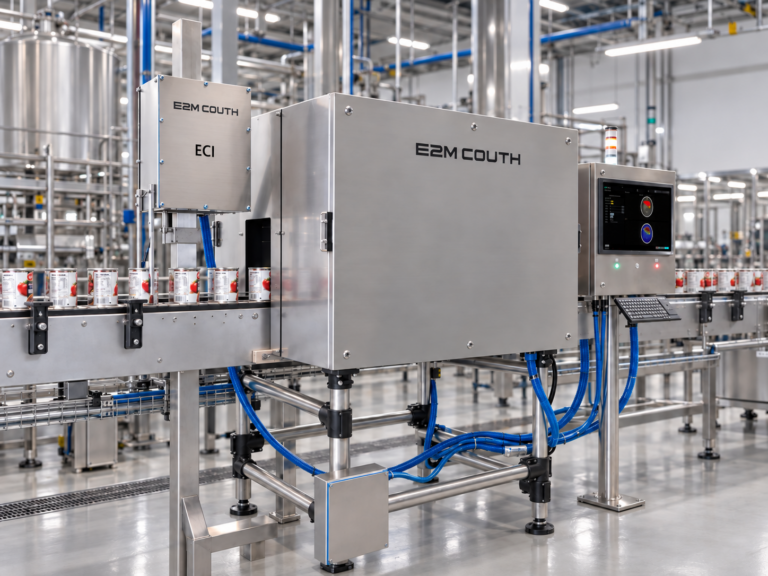
- Food Industry: In food manufacturing, machine vision systems are used to inspect products for size, shape, and packaging integrity. For example, they can ensure that every product is sealed correctly and free from contaminants.
- Pharmaceuticals: In the pharmaceutical sector, these systems are used to check for defects in tablets, bottles, or labels, ensuring that each product meets strict regulatory standards.
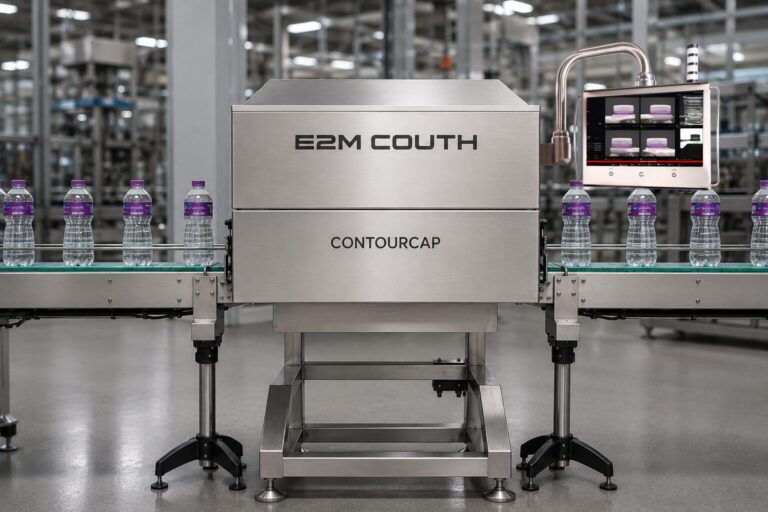
- Beverage Industry: In the beverage industry, E2M COUTH’s inspection systems monitor filling levels, cap sealing, and labeling accuracy. These solutions help detect underfilled or overfilled containers, misaligned caps, and missing or incorrect labels, ensuring product quality and regulatory compliance.
Across all these industries, machine vision systems enable automated quality inspection, allowing manufacturers to maintain rigorous standards while improving efficiency and reducing costs. The shift from manual to automated inspection marks a significant advancement in how we approach quality control in modern manufacturing processes.
Key benefits of vision systems for quality control in manufacturing
These are the main benefits of quality control systems:
Improved accuracy and precision
One of the standout benefits of vision systems for quality control is their ability to detect even the smallest defects. Machine vision systems are designed to capture high-resolution images and analyze them with incredible precision. Whether it’s identifying scratches on a surface, misalignment of components, or minute dimensional discrepancies, these systems ensure that every product meets stringent quality standards. This level of detail, often beyond human detection capabilities, guarantees that only the highest-quality products move forward in the production process.
Speed and efficiency
In the fast-paced world of manufacturing, speed is essential, but it cannot come at the cost of quality. Automated quality inspection through machine vision allows for rapid analysis of products as they move through the production line. By automating the inspection process, manufacturers can maintain high production rates without sacrificing accuracy. Vision systems operate at speeds that far exceed human capabilities, enabling manufacturers to achieve higher throughput while still ensuring that each product meets the required standards.
Consistency and reliability
Human inspectors are prone to fatigue and errors, especially during long production runs. Machine vision, however, provides unwavering consistency and reliability. These systems can continuously monitor and inspect products over extended periods without variation in performance, ensuring uniformity across large batches. This results in a more predictable, reliable output, which is crucial for meeting both customer expectations and regulatory requirements.

Real-time data for decision making
Another key advantage of machine vision systems is their ability to process data in real time. By instantly analyzing visual data, these systems can detect defects or variations as soon as they occur, enabling quick decision-making and immediate corrective actions. This real-time analysis not only boosts quality control but also improves overall operational efficiency by reducing downtime and preventing defects from reaching downstream processes.
How Machine Vision Systems Automate Quality Control Processes
Machine vision systems have transformed the landscape of quality control automation by taking over repetitive inspection tasks that were once handled manually. These systems are designed to perform consistent, high-speed inspections, automating everything from visual checks to measurements. Once set up, they operate autonomously, reducing the need for human intervention and significantly speeding up the quality control process. This automation not only improves the accuracy of inspections but also frees up human resources to focus on more complex tasks, increasing overall productivity.
Machine vision systems are versatile and can conduct various types of inspections to ensure product quality:
- Cap Inspection: Ensures the presence, correct positioning, and proper closure of caps. It also checks for issues like tilted caps or defects in the tamper-evident ring, helping to prevent contamination, spills, and quality degradation.
- Filling Level Inspection: Confirms the correct level of liquid in containers, avoiding overfilling or underfilling. This is vital for compliance with industry regulations and ensuring customer satisfaction while reducing waste.
- Labeling Inspection: Verifies label application, ensuring presence, alignment, and readability. It detects errors like missing or inverted labels, double labeling, or localized wrinkles, which can compromise product presentation and compliance.
- Marking and Coding Verification: Inspects laser or thermal transfer markings for clarity, completeness, and accuracy. This step ensures traceability and adherence to production standards, critical for industries requiring high levels of transparency.
- Box and Package Inspection: Monitors packaging for defects such as the presence of foreign objects, missing bottles, incorrect logos, or undesired colors. It ensures that all packaged goods meet the required standards before shipping.
Each of these inspections plays a key role in maintaining high standards and reducing the risk of defects reaching customers, ensuring both product quality and brand reputation are upheld.
E2M COUTH’s solutions for quality control
E2M COUTH is a leader in providing tailored quality control automation solutions that help businesses enhance their inspection processes. Two of their standout systems include:
- Contourvision Label Inspection: This system is designed to automate the inspection of labels on products. It ensures that labels are correctly positioned, legible, and free of defects, which is critical for ensuring proper branding and compliance with regulatory standards.
- Visiocap Cap Inspection Systems: Specifically developed for the beverage and pharmaceutical industries, Visiocap automates the inspection of bottle caps, ensuring they are properly sealed, free from defects, and meet dimensional standards. This system helps ensure that products are safe and secure for consumers.
With E2M COUTH’s solutions, manufacturers can achieve greater efficiency and accuracy in their quality control processes, minimizing human error while ensuring high-quality standards across their products.
The role of vision-based systems in ensuring compliance and reducing errors
Here’s how these systems work to reduce errors in production:
Regulatory compliance
In industries such as food packaging and pharmaceuticals, regulatory compliance is not just a matter of quality—it’s a legal requirement. Vision-based systems play a crucial role in helping businesses meet these strict standards by automating the inspection of products and packaging. For example, in the food industry, vision systems can verify that packaging is properly sealed, labeled with correct expiration dates, and free of contamination. Similarly, in pharmaceuticals, they ensure that packaging meets specific regulatory guidelines, such as correct labeling, tamper-evident seals, and accurate batch numbers. By automating these inspections, vision systems reduce human error and ensure that products consistently meet regulatory requirements, helping companies avoid costly fines and reputational damage.
Preventing recalls
One of the most significant risks in manufacturing is the potential for product recalls, which can result in financial losses, legal consequences, and severe damage to brand reputation. Vision systems mitigate this risk by detecting defects early in the production process, before products reach the market. For example, in food packaging, these systems can identify misprints, missing or incorrect labels, or even contamination. By flagging these issues in real time, manufacturers can address problems before they escalate into full-scale recalls. In industries such as pharmaceuticals and electronics, where safety is paramount, vision-based systems help ensure that only products meeting strict quality standards reach consumers, drastically reducing the risk of costly recalls.
Defect detection and elimination
The power of machine vision lies in its ability to detect defects that may be invisible to the human eye. Vision systems excel at identifying issues such as packaging flaws, misprints, or contamination, ensuring that only products of the highest quality leave the production line. For instance, in packaging, these systems can spot flaws such as incorrect label placement, damaged seals, or tears in the packaging material. Similarly, they can detect contamination, such as foreign objects or inconsistencies in product appearance.
E2M COUTH’s vision systems for quality control are specifically designed to catch these types of defects early in the production process, eliminating them before they become costly issues. By ensuring that defective products are removed, machine vision helps maintain high product standards and safeguards brand reputation.

How E2M COUTH vision systems are designed for maximum efficiency
Find out how vision systems are designed to increase efficiency on a production line:
Customization for various industries
E2M COUTH’s vision systems are highly adaptable, making them ideal for a wide range of industries such as food, beverage, chemicals and pharmaceuticals. These systems can be tailored to meet the specific needs of each sector, whether it’s inspecting food packaging for safety compliance, checking the integrity of beverage bottle seals, verifying the accuracy of electronic components, or ensuring pharmaceuticals meet strict labeling regulations. By offering industry-specific solutions, E2M COUTH ensures optimal performance and precision in every sector, improving overall quality control and product consistency.
Seamless integration into production lines
One of the key advantages of E2M COUTH vision systems is their easy integration into existing production lines. Whether businesses are operating high-speed automated systems or more traditional setups, these vision systems are designed for smooth implementation. They work alongside existing machinery without disrupting operations, providing real-time, automated inspection that boosts efficiency and minimizes downtime. This seamless integration ensures that manufacturers can enhance their quality control processes without the need for costly overhauls or extended production halts.
Cost efficiency
Automating quality control with E2M COUTH vision systems leads to significant long-term cost savings. By reducing the need for manual inspections, manufacturers can lower labor costs and decrease the risk of human error, which can result in defects, rework, and waste. Additionally, early defect detection helps avoid costly recalls and minimizes material waste, making the production process more efficient. Over time, the automation of quality control processes not only boosts productivity but also delivers a strong return on investment, contributing to sustainable cost savings across operations.
Do you want to know more about the systems we offer at E2M COUTH for quality control? Contact us and we will be happy to help you.