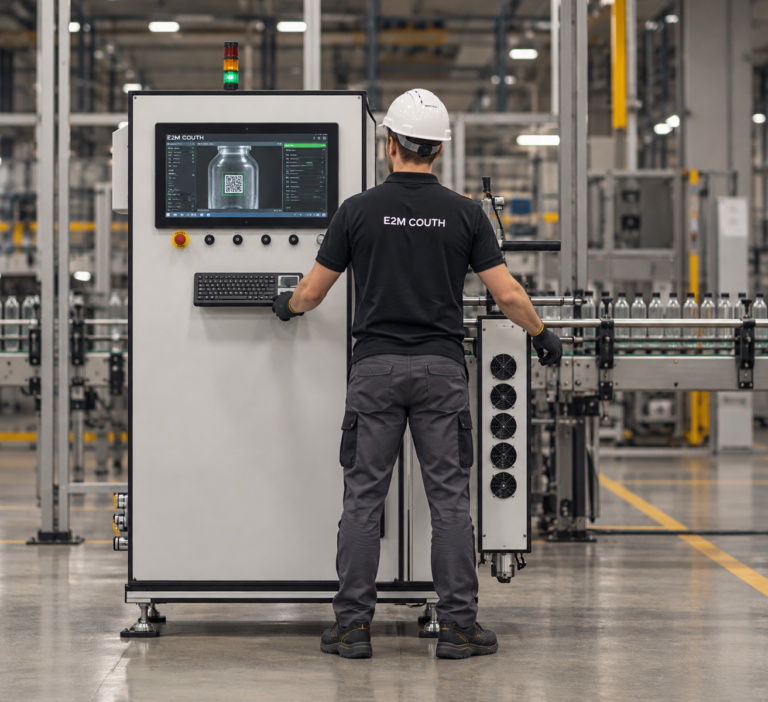
At E2M COUTH, we know that effective canned food inspection requires control at multiple points across the production line. From the moment an empty can enters the process to the point where finished cases are palletized, each stage can affect product quality, line efficiency, and final presentation.
That is why we develop can inspection machine vision and automation solutions for the food industry that cover key stages such as empty-can inspection, orientation, seam inspection, dent detection, automatic rejection, traceability, case packing, packaging inspection, and palletizing. In this article, we follow the can through the complete line and explain how our systems help manufacturers strengthen canning line quality control from infeed to end-of-line.
Canning line quality control starts before the can is filled
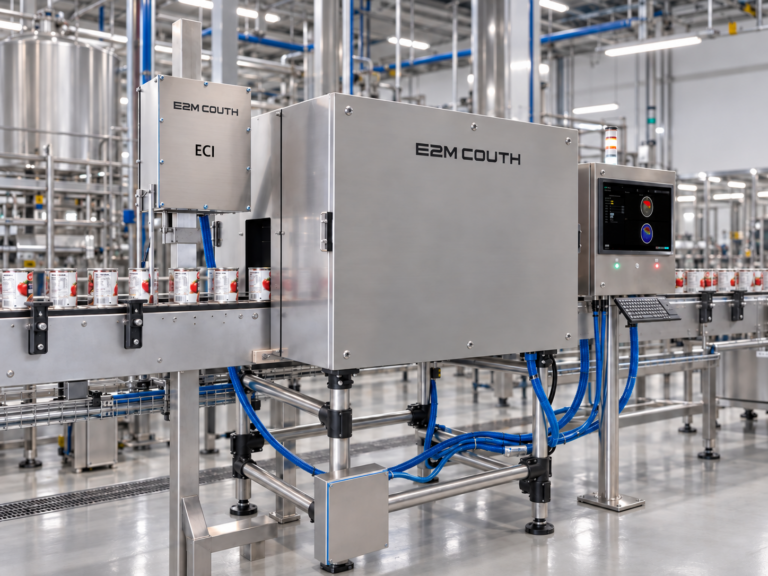
Quality control begins before product ever reaches the filling stage. At E2M COUTH, we use our ECI Empty Can Inspection System to identify defects and irregularities in empty containers before they continue through the production line. This early inspection helps manufacturers strengthen canning line quality control while preventing unsuitable cans from moving into later processing stages.
Inspecting empty cans with machine vision
Our ECI system uses can inspection machine vision to examine critical areas of the empty container. The system can inspect the can interior, side walls, bottom, upper area and flange, while also checking parameters such as can ovality and the presence of external contaminants on the bottom.
By performing these checks before filling, we can identify problems such as damaged surfaces, dimensional irregularities or compromised flange areas at an earlier stage. This reduces the risk of defective containers progressing farther along the line.
Detecting can defects before product Is added
Early can defect detection also improves process efficiency. Rejecting a non-conforming empty can before filling avoids using product and production resources on a container that does not meet the required quality criteria.
Our ECI system integrates this canned food inspection into the production flow, helping manufacturers establish a more consistent quality-control process from the very beginning of the line.
Can orientation: Positioning containers correctly for downstream processes
In some canned food production lines, containers need to reach the next stage in a defined position. At E2M COUTH, we provide orientation solutions designed to control container positioning when the application requires it.
Controlled orientation with Flexiturn
Our Flexiturn system is developed to orient containers automatically as they move through the line. This can be especially useful when downstream processes depend on consistent positioning for inspection, marking, packaging, or other automated operations.
By integrating orientation into the production flow, we help reduce variability before the can reaches subsequent control points. The system can be configured according to the characteristics of the container and the specific requirements of the line.
This approach supports more consistent canning line quality control, because correctly positioned containers can move through downstream processes in a more predictable and controlled way.
Seam inspection of cans with Visiocanend
The closure is one of the most critical areas of a metal can. Once the product has been filled and the can has been sealed, we need to verify that the double seam meets the required quality criteria before the container continues through the line. At E2M COUTH, we address this stage with Visiocanend, our machine vision solution for seam inspection of cans in the food industry.
Inspecting the double seam with machine vision
Visiocanend is designed to inspect the closure area of metal containers automatically and at production speed. Using high-resolution vision technology, we analyze the double seam and identify visible irregularities that may indicate a non-conforming closure.
This automated can inspection machine vision process gives manufacturers a consistent method for checking each container instead of depending exclusively on manual visual controls. By integrating the inspection directly into the production line, we can detect closure-related defects before affected cans move into later stages of packaging and handling.
Strengthening canning line quality control after seaming
Reliable seam inspection also supports broader canning line quality control. When a closure defect is detected, the system can generate the corresponding signal so that the non-conforming container can be managed by the line’s rejection process.
At E2M COUTH, we use Visiocanend as part of an integrated approach to canned food inspection, combining automated detection with downstream handling. This allows manufacturers to maintain continuous production while applying repeatable
inspection criteria to one of the can’s most important quality points.
Dent detection in cans with 360° inspection
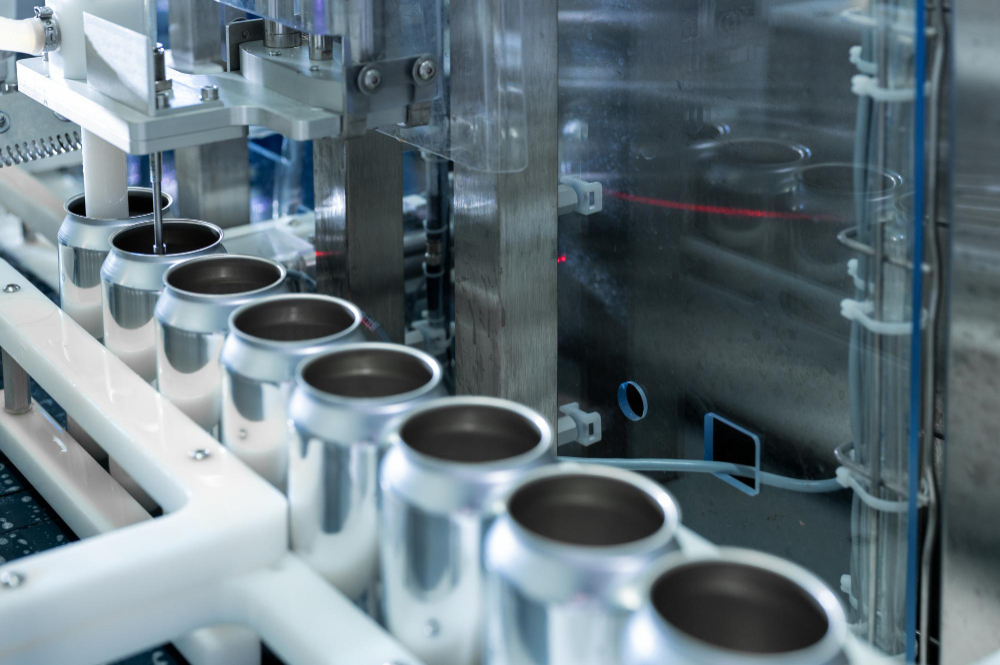
After closure inspection, the next step is to verify the condition of the can body. At E2M COUTH, we use Visiodents to perform 360° inspection around the container perimeter, allowing us to identify defects that may not be visible from a single viewing angle.
Detecting dents, impacts and deformations
Visiodents is designed for dent detection in cans and other visible irregularities on the container wall. The system can detect impacts, deformations, printing defects, and problems related to the position of the can ring.
By inspecting the complete perimeter, we can reduce blind spots and apply consistent criteria to every container moving through the line. This makes automated can defect detection especially valuable in high-speed production environments where manual inspection may not provide the same level of repeatability.
Integrating 360° inspection into existing lines
Our Visiodents system can be integrated into existing conveyors, making it possible to add can inspection machine vision without redesigning the entire production line. The solution also supports format changes, real-time production statistics, and connectivity with MES or ERP environments.
By combining inspection data with rejection and line-control signals, we help manufacturers turn visual detection into an active part of canned food inspection. This creates a more controlled process before cans continue toward secondary packaging and end-of-line operations.
Automatic reject systems for non-conforming cans
Detecting a defect is only one part of the quality-control process. Once a can has been identified as non-conforming, it must be removed from the production flow accurately and without affecting acceptable containers.
At E2M COUTH, we integrate inspection systems with different reject systems for cans solutions, including Multistep, Proportional Rejection and Push Rejection. The most suitable option depends on factors such as the type of container, its stability, line speed and the characteristics of the application.
From detection to automatic rejection
When our vision system detects a defect, the corresponding signal is sent to the control system so the affected container can be tracked and removed at the designated rejection point.
This connection between defect detection and automatic rejection helps maintain continuous production while preventing defective units from advancing to later packaging stages.
By combining inspection and rejection within the same line strategy, we help manufacturers strengthen canning line quality control and apply consistent acceptance criteria throughout the process.
Marking and traceability in the canning line
Once cans have passed the main inspection stages, identification and traceability become another important part of the production process. At E2M COUTH, we provide laser-marking solutions that allow manufacturers to apply variable information directly to packaging as part of the line.
Applying variable information to cans
Depending on the application, our systems can mark information such as batch numbers, production dates, expiration dates, serial data or other variable codes required for product identification.
We work with different laser technologies, including Fiber, MOPA and CO₂, selecting the most suitable option according to the packaging material, required contrast and production conditions.
Integrating marking into the line helps manufacturers maintain consistent product identification while reducing reliance on separate manual processes. It also complements broader canning line quality control by ensuring that accepted products continue through production with the information needed for tracking and identification.
In this way, inspection, rejection and marking can work together as coordinated stages within the same automated canned-food production process.
Case packing of cans at the end of the line
Once cans have been inspected, accepted, and correctly identified, they move into the secondary packaging stage. At E2M COUTH, we provide case packing of cans solutions designed to automate this part of the line and maintain a controlled flow toward final palletizing.
Wrap-Around case packing
Our wrap-around systems are designed to form the package around the grouped product, helping manufacturers automate the transition from individual cans to transport-ready cases.
Depending on the application, we can integrate continuous or intermittent solutions to match the required production conditions and packaging format.
RSC case packing
We also provide RSC or American-box case packing solutions for applications that use preformed corrugated cases. These systems can automate different stages of the process, including box forming, product loading, and top-flap sealing.
By integrating case packing with upstream inspection and rejection, we help ensure that only accepted cans continue into secondary packaging. This supports more consistent canning line quality control and creates a smoother connection between product inspection, packaging, and the final end-of-line operations.
Inspecting packed cases before palletizing
Before packed products move into palletizing, E2M COUTH can add a final inspection stage with Visiobox, our packaging inspection system for checking cases and their contents before the end of the line.
Final quality checks with Visiobox
Depending on the configuration, Visiobox can verify elements such as box condition, labels, logos, format, and the presence or absence of containers inside the case. In applicable setups, the system can also perform height or 3D checks to confirm that the package meets the defined criteria.
Positioning this inspection before palletizing adds another layer of canning line quality control after the case packing of cans process. It allows us to identify packaging-related defects before finished cases are stacked and prepared for logistics.
By combining secondary-packaging inspection with upstream can defect detection, we help manufacturers maintain a more consistent quality strategy from individual container inspection through to the final packed case.
Can palletizing: Automating the final stage of the line
After case packing and final packaging inspection, the process reaches its last stage: palletizing. At E2M COUTH, we provide can palletizing solutions designed to automate the handling and stacking of finished cases before they move into storage or distribution.
Connecting packaging with end-of-line automation
Our palletizing systems help position packed cases according to the required pallet pattern, creating a consistent and repeatable end-of-line process. By coordinating palletizing with upstream case packing of cans, we can help maintain a continuous product flow and reduce the need for manual handling at the end of the line.
This final stage completes the automated journey from individual can inspection to finished pallet. By combining inspection, rejection, case packing, packaging control, and palletizing, we help manufacturers create a more integrated approach to canning line quality control from production through to logistics.
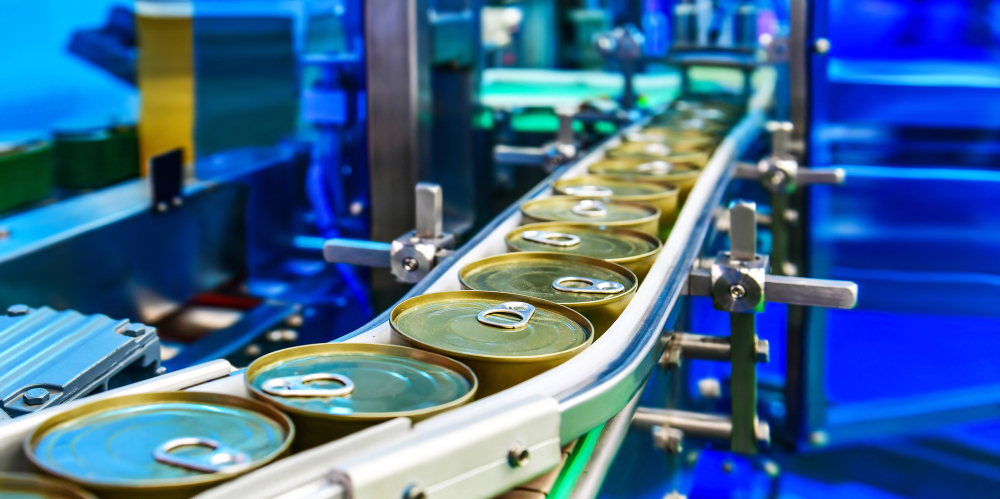
From can inspection to palletizing with E2M COUTH
Effective canned food inspection is not limited to one control point. At E2M COUTH, we approach the process as a complete sequence in which each stage contributes to product quality, production efficiency, and end-of-line performance.
From empty-can inspection with ECI to orientation, seam control with VisioCanEnd, dent detection in cans with VisioDents, automatic rejection, marking and traceability, case packing, VisioBox packaging inspection, and final palletizing, our solutions cover multiple critical points across the canned-food production line.
By connecting these technologies within the same production environment, we help manufacturers create a more consistent approach to canning line quality control. The objective is not simply to detect defects, but to ensure that inspection results lead to the right action at the right stage, whether that means rejecting a non-conforming can, verifying a packed case, or preparing finished product for palletizing.
If you are looking to improve can inspection machine vision, rejection, packaging, or end-of-line automation in your facility, contact us to discuss your application and identify the E2M COUTH solutions that best fit your production requirements.