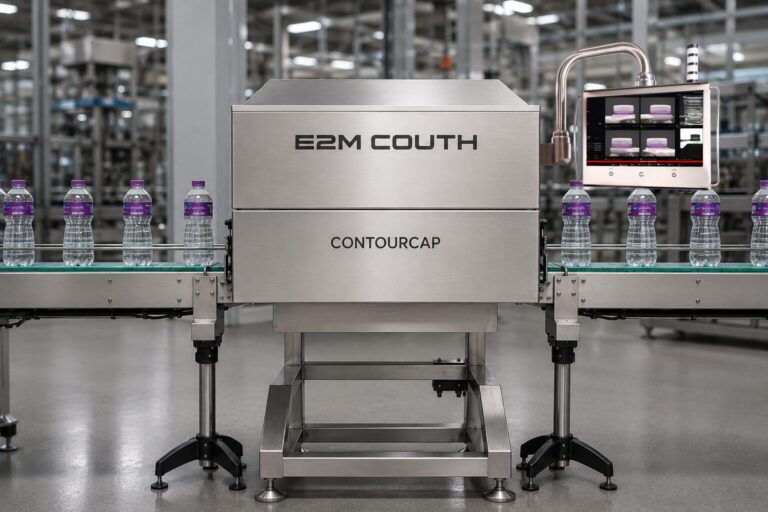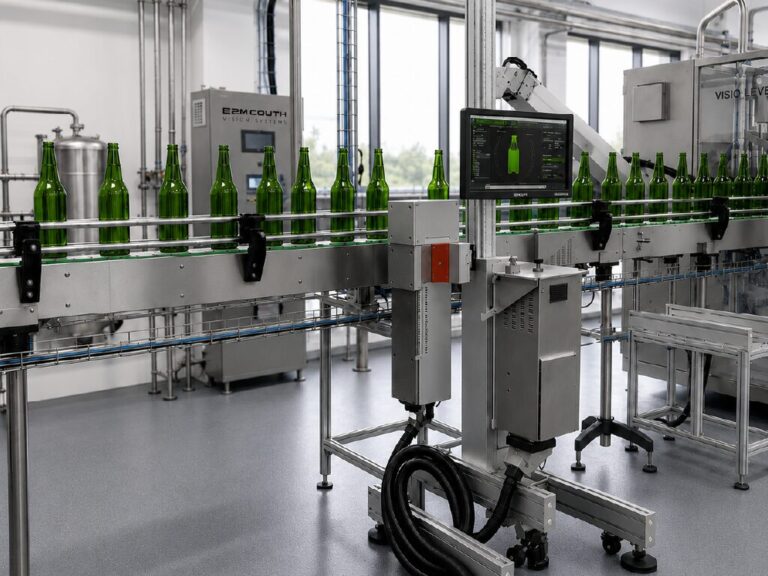

At E2M COUTH, we offer machine vision and industrial marking systems to improve quality control on pharmaceutical production lines. In this context, pharmaceutical serialization is key to identifying each product unit and strengthening traceability from manufacturing through distribution.
In the pharmaceutical sector, it’s not enough to know which batch a package belongs to—it’s also necessary to mark, verify, and inspect each unit with precision. Therefore, combining marking and machine vision allows for the creation of more reliable pharmaceutical traceability, reducing identification errors and preventing non-compliant products from remaining on the line.
What is pharmaceutical traceability, and why is it different from other sectors?
Pharmaceutical traceability is the set of processes that allows for the identification, recording, and tracking of a pharmaceutical product from its manufacture through to its distribution or end use. Its goal is to ensure that every package, batch, or unit can be linked to reliable information about its origin, production, quality control, and movement within the supply chain.
In the pharmaceutical sector, traceability requirements are stricter than in other sectors because it directly affects patient safety. An identification error, product mix-up, or incorrect marking can compromise the quality of the medication and hinder the recall of non-compliant units.
For this reason, simply recording data in a system is not enough. The information must correspond to the physical product moving along the line. This is where industrial marking, automated inspection, and machine vision come into play, helping to verify that each package is correctly identified.
At E2M COUTH, we offer inspection, guidance, rejection, industrial marking, and end-of-line solutions to improve quality on production lines in demanding sectors such as pharmaceuticals, cosmetics, food, beverages, and other industries. In the pharmaceutical sector, this precision is crucial for ensuring reliable traceability and reducing the risk of misidentified products continuing through the process.
What is pharmaceutical serialization?
Pharmaceutical serialization is the process of assigning a unique identifier to each product unit. In other words, each package, vial, syringe, ampoule, or box can be distinguished from the rest by a specific code or marking.
This identifier acts as the product’s individual “fingerprint”. Even if several units belong to the same batch, serialization makes it possible to identify a specific unit within the entire production run. This provides a more precise level of control than traceability based solely on batches.
In a pharmaceutical production line, pharmaceutical serialization links the physical product to the information recorded in the system. For this link to be reliable, the marking must be applied correctly and then verified using inspection systems. If the code is missing, blurred, misplaced, or does not meet the defined parameters, traceability may be compromised.
At E2M COUTH, we view serialization as part of a broader quality control process.It’s not just about printing data on the packaging, but about verifying that the data exists, is legible, and allows each unit to be correctly identified. For this reason, industrial marking and machine vision are two key elements for strengthening pharmaceutical traceability in demanding production environments.
Difference Between Batch Traceability and Pharmaceutical Serialization
Although they often appear together, batch traceability and pharmaceutical serialization do not offer the same level of identification. The former allows for the tracking of a group of products manufactured under common conditions. The latter identifies each unit individually.
Batch Traceability: Identification of a Group
B Batch traceability groups units that share the same manufacturing process, date, production line, or procedureB . It is useful for locating related products and taking action in the event of an incident affecting an entire series. However, this system does not distinguish a specific unit within the group. If thousands of vials belong to the same batch, they are all linked to a single collective reference.
Serialization: Individual Identification of Each Unit
Pharmaceutical serialization adds a unique identifier to each package. Thus, two units from the same batch can be distinguished from one another. This level of precision strengthens pharmaceutical traceability because it allows for the monitoring not only of the production group but also of each physical product as it moves down the line. Therefore, batching and serialization are not competing concepts—they complement each other.
Marking as the First Step Toward Reliable Pharmaceutical Traceability
Reliable pharmaceutical traceability cannot exist if the product is not properly marked. Marking is the first link between the physical unit and the information recorded in the system: batch, date, code, identifier, or any data necessary to track the product’s journey.
In pharmaceutical production lines, this marking must be clear, stable, and verifiable. It is not enough to simply print data on the packaging; it must also be verified that the marking is present, reads correctly, and complies with the parameters defined for each format.
Faulty marking can lead to reading errors, unnecessary rejections, or loss of control over a specific unit. This is especially critical in pharmaceutical serialization, as each package must retain its individual identification throughout the entire process.
At E2M COUTH, we work with industrial marking and automated inspection solutions to ensure that this identification is reliable from the very beginning. Our approach combines physical marking with machine vision systems capable of verifying the result in-line, contactlessly, and at production speed.
We also offer laser markingB solutionsB , which are designed to integrate into industrial environments and create durable markings on various materials. These laser solutions enable precise, permanent markings, facilitating subsequent verification via machine vision.
In this sense, marking is no longer just a simple impression; it becomes an active part of quality control and pharmaceutical product traceability.
How Is Each Pharmaceutical Unit Physically Marked?
Physical marking must be adapted to the type of packaging, the material, the available space, and the line speed. Identifying a box is not the same as marking smaller or cylindrical units, such as vials, syringes, or ampoules. In all cases, the goal is the same: to ensure that each product can be linked to specific, verifiable information.
Marking on Syringes
Syringes pose a challenge due to their geometry, size, and the need to maintain precise orientation during the process. The marking must be applied to a visible area compatible with subsequent inspection, avoiding reading errors or loss of information.
Marking on Vials
On vials, the marking can appear in different areas of the container or its components, such as the cap, the closure, the label, or the area defined by each format. Here, it is important to verify that the marked data exists, is legible, and is free of defects.
At E2M COUTH, we offer solutions such as VisioCrimping, a 360° inspection system for vials that detects crimping defects, improperly placed seals, cap defects, and verifies the marking.
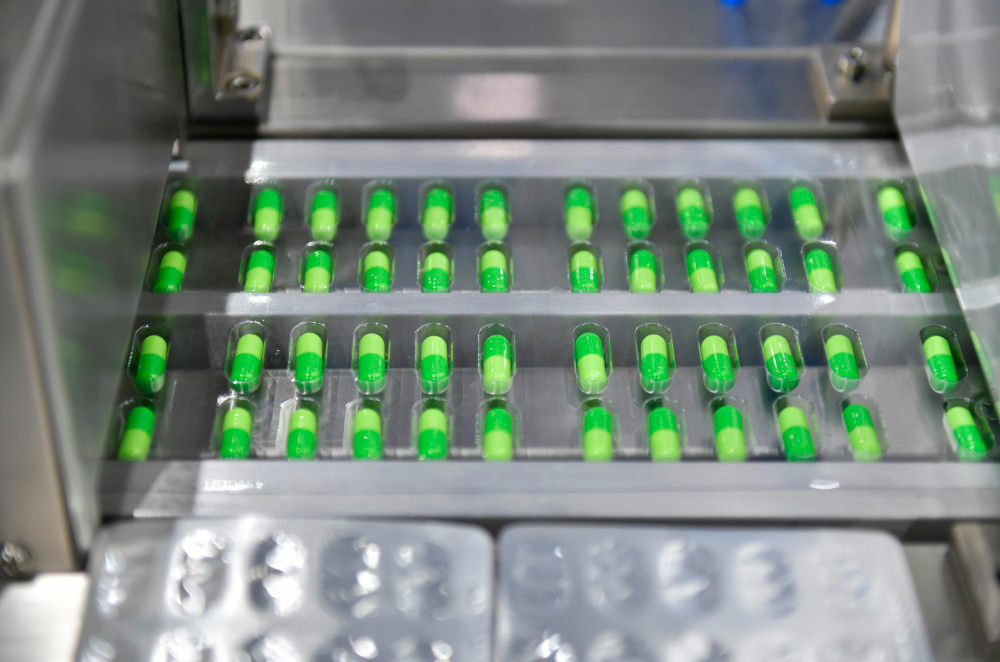
Marking on Blisters
Blisters require precise identification on small and, in many cases, curved surfaces. Therefore, the marking system and subsequent inspection must work in coordination to prevent incorrect readings.
Common Types of Marking
In pharmaceutical serialization, codes, alphanumeric characters, batch data, dates, or production references may be used. What matters is not just marking, but verifying that the marking ensures reliable pharmaceutical traceability.
Why Machine Vision Is Key in Pharmaceutical Serialization
Machine vision is key in pharmaceutical serialization because it automatically verifies that each marked unit meets the defined requirements. It does more than simply detect the presence of a code: it also helps verify whether the marking is legible, properly positioned, and free of defects that could compromise product identification.
On a pharmaceutical production line,relying solely on manual checks increases the risk of error, especially when working with continuous production runs and small package sizes. Machine vision allows for the inspection of each package in-line, non-contact, and at production speed, maintaining constant control over the quality of the marking.
This type of inspection is useful for detecting missing codes, blurred prints, excess ink, incorrect characters, or deviations from established parameters. If a unit does not meet the requirements, it can be identified before moving on to subsequent stages.
At E2M COUTH, we offer machine vision systems designed for quality control in demanding industrial environments. In the pharmaceutical sector, this technology ensures that pharmaceutical traceability relies not only on documentary records but also on actual verification of the physical product.
Thus,marking and machine vision work together: the former identifies the unit, and the latter confirms that this identification is correct. This combination is what allows us to strengthen traceability, reduce errors, and improve the safety of the production process.
Inspection, Rejection, and Control: How to Prevent a Non-Compliant Unit from Moving Down the Line
Pharmaceutical serialization does not end when the product is marked or scanned.For the process to be reliable, it is also necessary to verify that each unit meets the defined parameters and to take action when a deviation occurs.
On a pharmaceutical production line, a unit with missing, blurred, incorrect, or misaligned markings should not proceed to subsequent stages. If it did, it could compromise pharmaceutical traceability and lead to quality control issues.
For this reason, automated inspection must be accompanied by rejection systems capable of removing packages that do not meet the established conditions from the production flow. This combination makes it possible to detect the problem and separate the non-conforming unit before it moves further down the line.
At E2M COUTH, we work with solutions that integrate inspection with rejection systems. In systems such as VisioCrimping, for example, it is possible to incorporate one of E2M COUTH’s rejection solutions.
Thus, the control is not limited to identifying the error: it also helps prevent a mismarked, defective, or non-compliant product from reaching stages where its removal would be more complex.
Benefits of Combining Marking and Machine Vision in Pharmaceutical Traceability
Combining industrial marking and machine vision strengthens pharmaceutical traceability at the product level itself, not just through documentary records. In pharmaceutical serialization processes, this combination helps control each unit with greater precision. The main benefits of pharmaceutical serialization:
- More reliable individual identification of each package, vial, syringe, or ampoule.
- Automatic marking verification, checking for presence, legibility, and position.
- Reduction of human errors in repetitive or high-speed checks.
- Early detection of non-conforming units before they move further down the line.
- Greater quality control in demanding pharmaceutical processes.
- Better response to incidents, by being able to link each unit to specific information.
- Non-contact inspection, especially useful for sensitive products.
- Integration into existing lines, depending on the format, production, and process requirements.
At E2M COUTH, we view this combination as a way to turn traceability into real control over the physical product.
Visiocrimping: 360° Inspection for Pharmaceutical Vials
At E2M COUTH, we offer Visiocrimping, a 360° inspection system designed for quality control of pharmaceutical vials. This solution inspects the crimp, improper placement of the seal, capsule defects, the presence or absence of the stopper, and the marking on each vial, helping to detect defects that could affect pharmaceutical traceability.
In addition, it operates non-contact and can be integrated into high-throughput lines, with an inspection capacity of up to 21,000 vials per hour. In pharmaceutical serialization processes, Visiocrimping helps verify that the marking is present, legible, and complies with defined parameters.

At E2M COUTH, we strengthen pharmaceutical traceability with automated inspection
Pharmaceutical serialization only adds value when marking, reading, and inspection work in coordination. At E2M COUTH, we help strengthen pharmaceutical traceability with machine vision and industrial marking systems tailored to demanding production lines.
Contact us and tell us what type of packaging you need to inspect so we can assess the best solution for your production line.