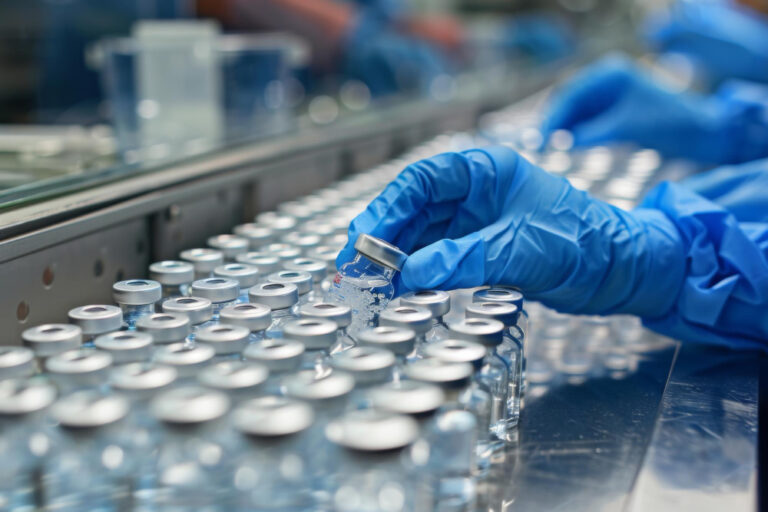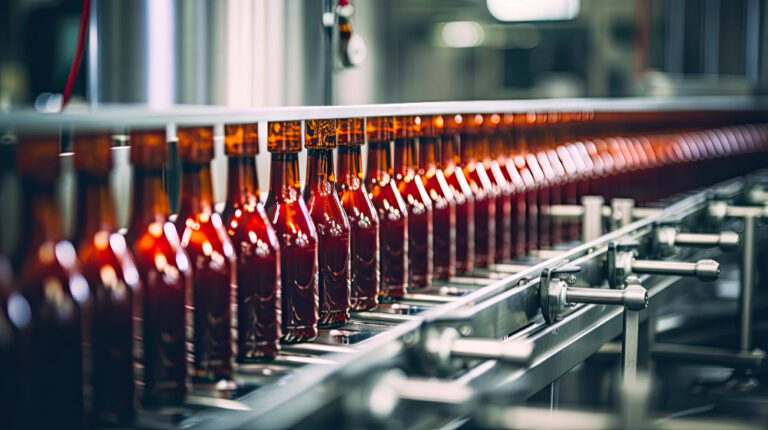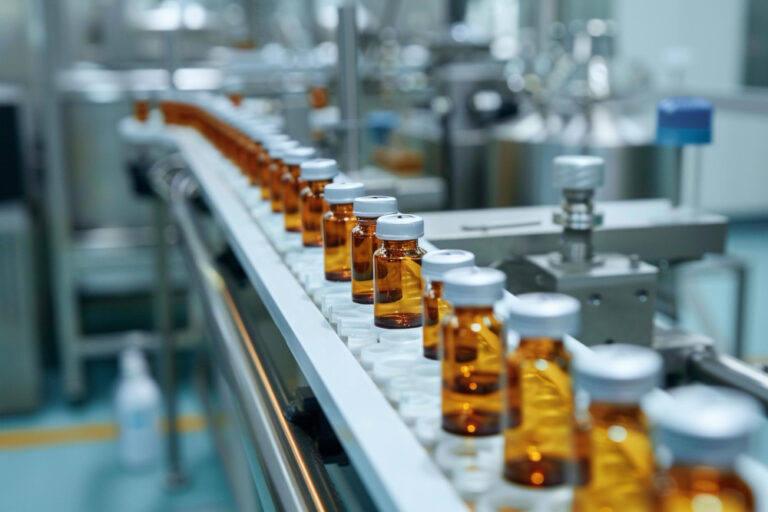

KPI’s in beverage and canning production lines are important performance indicators to evaluate and improve efficiency in production plants. These indicators are basic to improve processes, ensuring that quality standards, production times and cost reduction are met. In addition, the use of advanced technologies, such as the artificial vision systems that we offer at E2M COUTH, play a key role in continuous improvement, allowing us to detect faults, guarantee product quality and maximise productivity. These KPI’s not only improve efficiency, but also ensure the satisfaction of the end consumer.
What are KPIs and how are they applied in production?
A KPI (Key Performance Indicator) is a metric used to assess the performance and efficiency of a particular process. When it comes to production, KPIs are very important tools to measure the success of operations, allowing companies to identify areas for improvement and make informed decisions to optimise their processes.
In beverage and canning production lines, KPIs are used to evaluate various critical aspects, such as production speed, product quality, downtime, as well as the efficiency of resource use. These indicators make it possible to monitor, for example, how many units are produced per hour, how many products meet quality standards and how many resources (such as energy or materials) are used in each process.
Examples of KPI’s that are important in the beverage and canning industry may include:
- Production line throughput: Measurement of the quantity of products produced in a given time.
- Defect or rejection rate: Percentage of products that do not meet quality standards.
- Downtime: Time during which machines are idle due to failures or maintenance.
Continuous analysis of these KPIs will give your company a clear picture of how your production processes are performing, so you can later implement improvements. For example, if a high defect rate is detected, quality parameters can be adjusted or technologies such as machine vision can be incorporated to detect problems before they reach the consumer.
Discover the main KPI’s in the food sector
In the food sector, and especially in beverage and canned food packaging, KPIs play an essential role in ensuring product quality and operational efficiency. Some of the KPIs in the food sector are:
- Production throughput: This measures the quantity of products produced in a given time, in order to identify bottlenecks and areas for improvement in the production line.
- Defect rate or rejected products: This is a key indicator for quality control showing the percentage of products that do not meet quality standards, which has a direct impact on profitability and customer satisfaction.
- Downtime: The time that machines or production lines are idle for reasons such as failures or maintenance. This KPI is very important in order to identify and minimise downtime, which can improve overall efficiency.
- Production costs per unit: A key KPI for analysing the profitability of production, as it calculates the costs that are associated with each unit that is produced, thus helping to identify opportunities for cost reduction and margin improvement.
- Resource efficiency: Measuring the use of raw materials, energy and other resources makes it possible to improve and optimise production costs and reduce waste.
The implementation of these KPIs, in conjunction with real-time control technologies such as machine vision systems, allows for constant monitoring, thus facilitating rapid adjustments to improve product quality, reduce costs and increase profitability.
Specific KPIs in beverage and canning production lines
In beverage and canning production lines, KPIs in packaging lines are very important to ensure product quality, operational efficiency and process profitability. Below, we break down some of the most important KPIs in these sectors, with examples of how they are applied in the industry.
Rejection or defect rate
This KPI measures the percentage of products that do not meet quality standards and are therefore rejected during the production process. In the beverage and canning industry, this KPI may include defects such as broken packaging, incorrect filling or mislabelling. The reject rate is measured by looking at the number of defective units per batch produced. Keeping this rate low is essential to ensure the quality of the final product and to avoid economic losses.
Production line efficiency
Line efficiency refers to the amount of production achieved in relation to the time available and resources employed. This KPI is calculated by comparing actual production with theoretical production (the amount that should be produced if there were no errors). In beverage packaging lines, this can be measured by looking at how many bottles or cans are filled and labelled per hour, with the aim of increasing production without compromising quality.
Downtime
This KPI measures the time production lines are down due to failures, maintenance or unscheduled stops. In the canning industry, downtime can be caused by mechanical problems on packaging machines or sealing lines. To calculate this, the total downtime must be recorded for a given period and compared to the available production time. Reducing this time is essential to keep production running smoothly and efficiently.
Operator performance
In beverage production lines, operator performance can be measured by looking at how many units are processed by each operator in a given time. This KPI is useful to identify bottlenecks or areas where training or available resources can be improved.
Energy consumption per unit produced
This KPI is very important for assessing sustainability and operational costs. It measures the amount of energy consumed per unit produced on the canning or beverage line. By monitoring this indicator, manufacturers will be able to identify opportunities to minimise energy consumption and, consequently, the company’s operating costs.

How do machine vision systems improve KPIs in production?
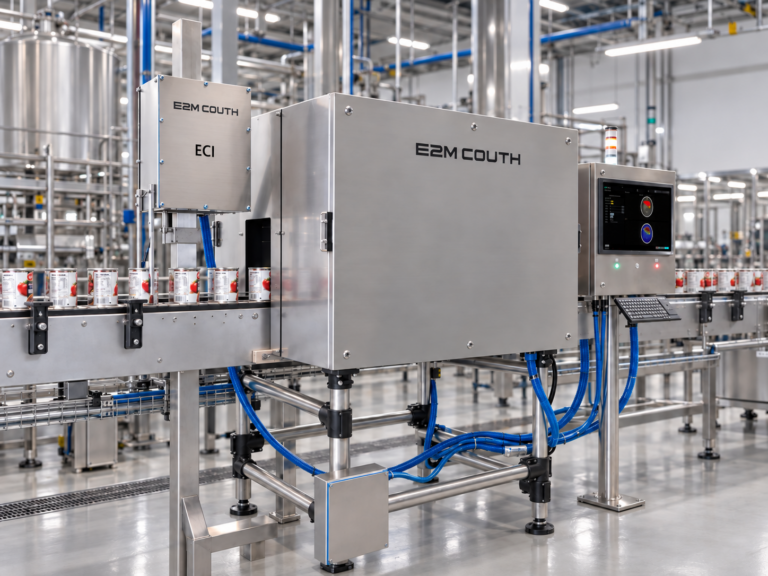
E2M COUTH’s artificial vision systems play a fundamental role in improving KPI’s in production lines. These technologies allow quality inspections to be carried out in real time, detecting defects or problems during the packaging or manufacturing process. Thanks to their high accuracy, machine vision systems, such as those offered by E2M COUTH, can identify defective products, such as mislabelled bottles or damaged containers, and automatically reject non-conforming products, thus improving the rejection rate.
In addition, by reducing human error and subsequent rejects, this technology is able to measure efficiency on the production line, thereby reducing downtime and increasing continuous production. Performance indicators, such as quality and profitability, are improved, as the automation of these processes reduces non-quality costs and ensures that only perfect products reach the end consumer.
The benefits of improving KPIs in production: Savings and efficiencies
Working with KPIs that are efficient in production offers a number of benefits, particularly in terms of cost savings and improved efficiency. By monitoring important indicators such as reject rate, line efficiency and downtime, companies will be able to quickly identify and correct areas of inefficiency, enabling cost reduction. This not only improves profitability, but also ensures end products that meet the highest standards.
The solutions we offer at E2M COUTH, with advanced machine vision, have a direct impact on improving these performance indicators. By detecting defects in real time and rejecting non-conforming products, waste and rework is significantly reduced, optimising production time. This, in turn, allows companies to maintain a steady flow of production and improve profitability by minimising downtime and maximising line throughput. Together, these benefits contribute to greater efficiency and quality, which strengthens competitiveness in the marketplace.
Do you want to know more about the solutions we offer at E2M COUTH for KPI compliance in packaging production lines? Contact us and we can help you with the best professional advice.