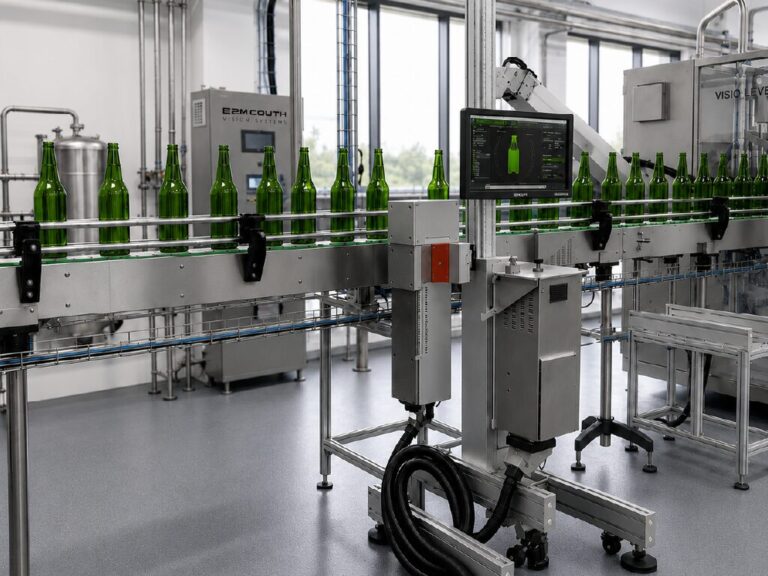
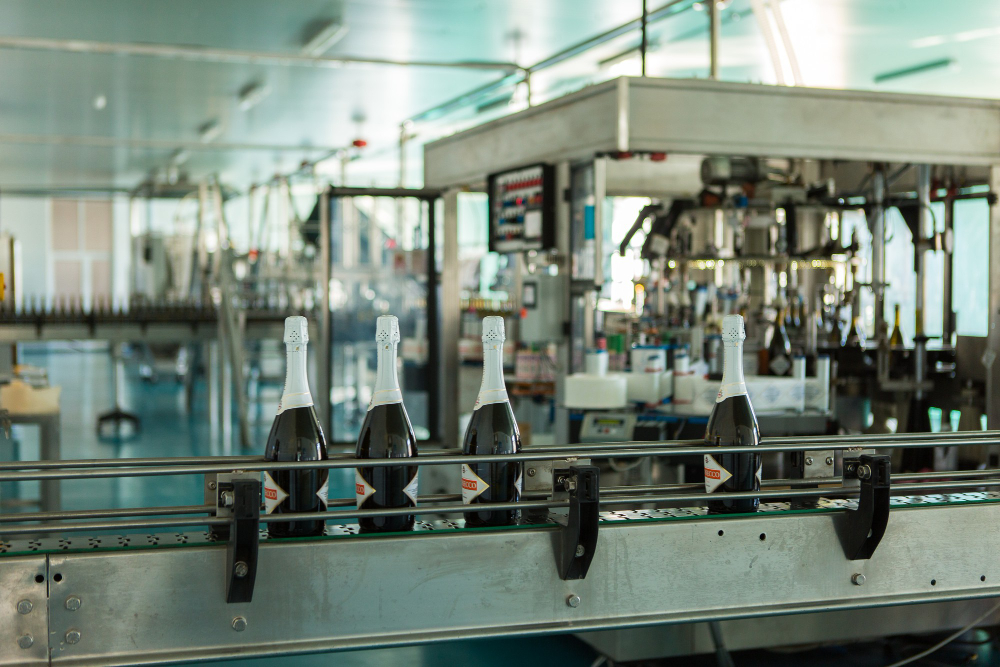
Modern production lines operate at unprecedented speeds, making automated inspection vital to avoid costly operational mistakes. Traditional machine vision relies on fixed, rigid rules, but integrating Deep Learning quality control completely changes the paradigm. By implementing artificial intelligence vision, manufacturing systems can analyze images, learn from examples, and detect patterns or defects much like a human operator, but with flawless, non-stop consistency. This shift to artificial intelligence machine vision allows plants to identify complex anomalies, adapt to product variations, and drastically reduce waste and operational errors. E2M COUTH develops intelligent vision solutions tailored to meet these evolving industrial challenges.
What is Deep Learning in industrial machine vision?
In the industrial sector, conversations often center around physical components, hardware, and cameras. However, the software running behind the scenes acts as the true engine ensuring normal system operations. Deep Learning is a subset of artificial intelligence based on advanced neural networks. It represents a paradigm shift from traditional, rule-based programming to an example-based methodology.
In traditional artificial vision, an engineer must manually program rigid rules and exact pixel thresholds to define a defect. If a product naturally varies in position, color, or shape, traditional systems often generate false rejections. Deep Learning software changes this dynamic entirely. Instead of following strict programming, the software processes images from high-resolution digital cameras and learns to identify anomalies by analyzing a database of example products.
This advanced computational intelligence allows the vision system to differentiate between acceptable, natural variations in production and critical quality flaws. The algorithm autonomously handles changes in orientation, lighting, or surface reflections without requiring human intervention or line stoppages. By learning directly from examples, Deep Learning software adapts organically to complex production environments, providing a level of adaptability that mirrors human visual judgment but functions at high industrial speeds.
The role of artificial intelligence vision in modern quality control
To maintain competitive throughput, modern packaging and bottling lines must minimize human intervention while simultaneously driving down the costs of non-quality. Integrating artificial intelligence vision into the manufacturing environment achieves this by simulating human visual inspection precision at maximum line speeds.
Human-Like visual analysis at industrial scale
Deep Learning networks are uniquely capable of analyzing images in a manner similar to how a human operator would, but with absolute objectivity and without fatigue. While a human inspector may overlook subtle defects over a long shift, an AI-driven vision system consistently applies learned criteria to every single item passing through the conveyor line, executing complex visual inspections in milliseconds.
Identifying complex, non-standard anomalies
Traditional vision systems excel at measuring fixed dimensions or finding high-contrast errors, but they fail when confronted with unstructured defects. E2M COUTH software addresses this challenge by identifying irregular anomalies that do not follow a predictable pattern. These complex variations include:
- Surface scratches or dents on metallic can bodies.
- Minor cosmetic tears or wrinkles in film and label materials.
- Foreign bodies or small glass particles adhering to the inside walls of containers.
- Structural deformities in complex sealing or closure components.
Driving operational efficiency and reducing waste
By deploying intelligent vision models directly into the production line, plants can achieve real-time tracking of process deviations. Catching variations early in the production cycle delivers immediate operational benefits:
- Reduction of scrap and waste: Stopping a faulty batch before it undergoes final filling or sterilization prevents massive material losses.
- Minimization of false rejects: Higher inspection accuracy ensures that good products are not erroneously discarded, maximizing line yield.
- Predictive error modeling: Aggregated inspection data allows plant managers to spot systemic errors on the line, such as a faulty filling valve or an a misaligned capper, before a total breakdown occurs.
Core benefits of implementing AI Machine Vision on the factory floor
Transitioning to automated intelligence provides manufacturing facilities with tangible operational advantages. Moving beyond static inspection parameters directly impacts overall factory productivity, providing a highly scalable approach to modern quality management.
Drastic reduction of product and packaging errors
Implementing Deep Learning quality control ensures a level of oversight that is practically impossible to replicate with manual labor or traditional rules. The software constantly monitors subtle trends and identifies micro-defects at the earliest possible stage. By executing non-destructive inspections on 100% of the passing units, the system prevents defective packaging from moving down the line, safeguarding overall brand reputation.
Minimizing material waste and product scrap
When an error occurs on a high-speed packaging or bottling line, hundreds of units can be compromised in a matter of minutes. AI machine vision provides real-time detection, allowing the software to send instantaneous digital signals to automated culling mechanisms. Removing faulty containers, misaligned lids, or poorly sealed packages before final distribution drastically cuts down on the costs of non-quality and protects manufacturing margins.
Adaptability to natural product and line variations
One of the greatest struggles for conventional vision hardware is maintaining consistency amid changing factory environments. Minor fluctuations in ambient lighting, small shifts in container positioning, or natural color variations can trigger false rejections in standard setups. Deep Learning algorithms are specifically engineered to handle these changes gracefully, adapting seamlessly to variables such as:
- Fluctuations in factory lighting conditions throughout different shifts.
- Heavy reflections from glossy metallic prints, aluminum finishes, or glass surfaces.
- Liquid agitation, unexpected product foam, or condensation drops on the outside of bottles.
Upgrade your high-speed inspection capabilities
Maintaining perfect quality control at maximum throughput demands intelligent automation. Contact the engineering team at E2M COUTH to evaluate your line requirements and discover how our advanced automated inspection solutions can minimize error rates in your facility.
Industrial applications: Intelligent vision across key sectors
Every manufacturing sector faces its own distinct set of packaging and verification challenges. E2M COUTH develops standard and tailored systems engineered to withstand the demanding conditions of high-speed industrial lines across multiple fields.
High-speed beverage and bottling operations
In high-throughput beverage plants, inspection systems must monitor complex sealing and filling operations without creating bottlenecks. Deep Learning architectures accurately verify cap alignment, check the integrity of security rings, and calculate fluid level variances despite the presence of foam or rapid movement on the conveyor belts.
Food processing and safety lines
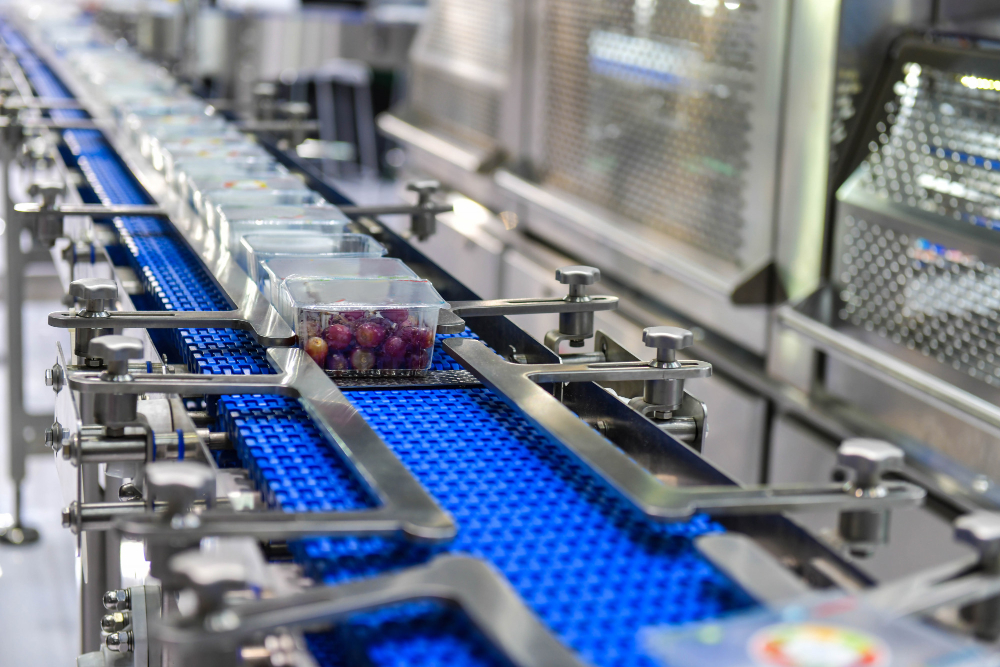
Food lines deal with a vast array of materials, from glass preserves to deep-drawn metallic cans and sealed thermoformed trays. Intelligent software inspects components such as glass jar margins to catch dangerous chipped rims before capper integration, ensuring total food safety.
Pharmaceutical, cosmetic, and special packaging
For pharmaceutical vials and cosmetic containers, missing text or a poorly crimped cap can lead to total batch rejection. Advanced inspection models rigorously cross-reference tracking details, read variable codes, and analyze crimping dimensions at up to 21,000 units per hour to confirm strict regulatory compliance.
Advanced label and wrap inspection
The visual presentation of a package directly impacts perceived brand value and consumer trust. However, executing precise quality control on labels poses a significant challenge for conventional machine vision hardware when lines run at maximum capacity. Deficiencies like wrinkles, tears, misalignment, or missing tracking details can easily escape rigid, rule-based algorithms due to natural variations in packaging reflections and lighting.
By implementing E2M COUTH architecture powered by Deep Learning quality control, these complex inspection challenges are automated directly on the conveyor system. The intelligent software handles multiple-view label analysis simultaneously:
- Alineación Vertical (Vertical Alignment): Verifying that labels sit perfectly within designated borders without vertical drift.
- Arrugas Localizadas (Localized Wrinkles): Detecting micro-wrinkles or air bubbles trapped beneath the film surface.
- Ausencia de Códigos (Missing Codes): Tracking the real-time presence of laser or inkjet-printed traceability details.
- Doble Etiquetado (Double Labeling): Identifying overlapping errors where multiple labels are accidentally applied to a single container.
Instead of adjusting hardware or re-programming thresholds for every product switch, factory personnel can manage format changes through intuitive, user-friendly software applications. This Deep Learning adaptability is perfectly embodied in systems like the Visiolabel, a high-performance solution that integrates into existing transport lines to inspect up to five distinct views of a package with absolute precision.
Complete 360-degree container inspection
In high-speed beverage and bottling plants, containers often arrive at the inspection zone completely unoriented. Traditional single-camera setups remain highly ineffective here, as critical defects can easily hide on the far side of a round bottle.
To solve this widespread industrial limitation, E2M COUTH engineered an advanced 360-degree artificial intelligence vision setup that reconstructs the entire perimeter of a container.
Using an array of four to six high-resolution CMOS cameras and an integrated LED backlight tunnel, the Deep Learning algorithm processes overlapping captures in real time. It unwraps the cylindrical surface into a single, seamless flat image to run the following functions:
- Integrity Verification: Inspecting wrap-around labels for tears, folds, or loose edges.
- Text and Language Matching: Confirming that text data, nutritional tables, and regional compliance languages are correct for the batch.
- Traceability Mapping: Running high-speed OCV and OCR models to verify batch variables and tracking data.
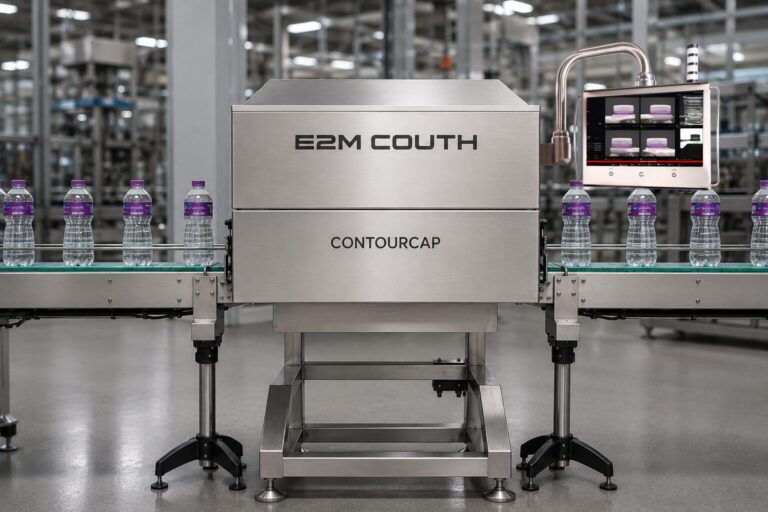
This sophisticated technology drives the Countourvision system. It provides plants with an inline solution that inspects the complete perimeter of unoriented round bottles without requiring any physical rotation or mechanical orientation devices, maximizing line speed while guaranteeing total error detection.
Software intelligence: The engine behind the hardware
While advanced digital cameras, lenses, and lighting tunnels capture crisp imagery on the conveyor belt, the machine vision software running behind the scenes acts as the true analytical brain. Within industrial environments, Deep Learning software transforms massive streams of visual data into immediate, actionable execution, ensuring that high production speeds do not compromise inspection quality.
E2M COUTH Multi-Process software architecture
Our proprietary, in-house vision software platform, Multiprocess, is specifically engineered to handle high-performance, real-time image analysis. In heavy production setups where transport bands run at speeds up to 3 meters per second, conventional computation frameworks often stutter.
The Miltiprocess architecture distributes processing loads instantly to ensure consistent execution:
- Simultaneous multi-view calculations: Processing up to seven high-resolution camera feeds concurrently to check the entire perimeter of a product without creating bottlenecks.
- High-throughput tracking: Maintaining flaw detection capabilities at line speeds reaching 90,000 units per hour depending on the inspection profile.
- Real-time synchronized rejection: Matching defect detection timestamps precisely with structural culling mechanisms, like the Multistep, progressive or pneumatic PUSH functions, to deflect non-conforming items seamlessly.
User-friendly interfaces and rapid format changes
A common concern among production plant managers and engineering directors is the perceived complexity of configuring artificial intelligence systems. E2M COUTH actively eliminates this technical barrier by designing intuitive software structures that operate inside a stable Windows interface.
Instead of writing lines of code or establishing manual pixel variables, line operators configure parameters visually. New packaging shapes, fresh labeling designs, and distinct bottle dimensions are stored as infinite customized program configurations.
When a batch changes, switching the entire system’s inspection criteria requires only a simple select-and-click movement on the robust 17-inch touchscreen monitor. The software instantly shifts its neural network tolerances automatically, dropping operational downtime close to zero.
Advancing your line with E2M COUTH intelligent vision
Implementing advanced vision systems is not just an investment in technology, it is an investment in your brand’s future and operational stability. By upgrading to Deep Learning architectures, operations can simulate human visual judgment at maximum line speeds, drastically improving efficiency while driving down the costs of non-quality.
Because industrial configurations vary significantly around the globe, E2M COUTH addresses our customers’ most frequent operational questions directly with tailored support:
- Global presence: We provide strong international support and verify distributor availability to serve your specific market.
- Personalized systems: If your plant handles a unique container geometry or requires custom inspections where no standard configuration exists, our engineering team can design and build special equipment according to your technical specifications.
- Flexible implementation: All solutions are engineered for rapid installation on your existing conveyor setups, preventing extensive mechanical alterations and minimizing operational downtime.
If you have any questions or would like to learn more about our production line systems, please contact us and we will provide you with professional advice.