If you want to understand how these processes fit into a comprehensive end-of-line automation strategy, we will explain it in this article.
In any industrial production line, the end of line is a critical phase that directly impacts overall efficiency, product traceability, and the end customer’s perception of quality. When the various end-of-line processes are correctly defined and coordinated, it is possible to optimize production rates and ensure consistency and control of the process from the first to the last product.
Phases that make up an industrial end-of-line process
At E2M COUTH, we conceive of these processes as an integrated whole where each stage must function in a synchronized and reliable manner.
Case erector: the start of a stable process
The process begins with the automatic erection of the cases, a key phase in ensuring the stability and repeatability of the packaging. A correctly sized and adjusted erector ensures that each case maintains its geometry, strength, and alignment, creating a solid foundation for the rest of the process.
Automation at this stage reduces manual errors, minimizes downtime, and allows different formats to be handled in a controlled manner, bringing regularity and continuity to the production flow.
Case packer: precision and control in product grouping
The case packer is the core of the end of line. This phase defines how products are grouped, oriented, and positioned within the case. An efficient case packing system ensures that each unit is positioned correctly, avoiding damage, misalignment, or variations that could affect transport or final quality.
Automating case packing allows you to maintain constant production rates, improve repeatability, and ensure total control over the product, regardless of the volume or speed of the line.
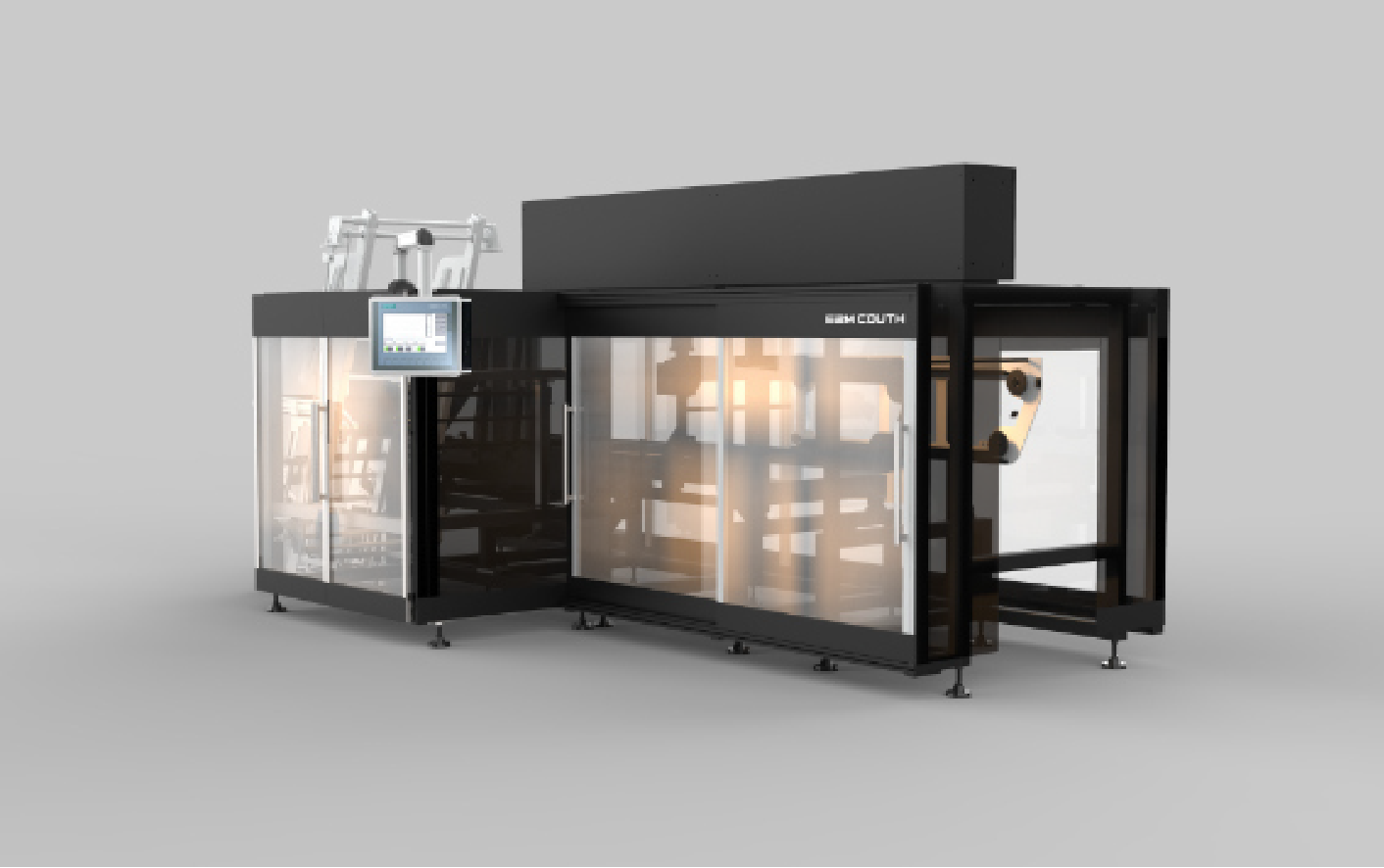
At E2M COUTH, we have two different types of case packers so you can choose the one that best suits your needs.
Case sealer: ensuring the integrity of the packaging
The process ends with the case sealer, which ensures that each package is correctly sealed. This stage is essential for preserving the integrity of the product during handling, storage, and distribution.
An automated sealer ensures uniform and reliable closure, eliminating variations and reinforcing the perceived quality of the final product, as well as contributing to traceability and logistical efficiency.
An integrated process for more efficient production
When the forming machine, case packer, and sealer work in coordination, the end of the line is no longer a simple closure of the production process but becomes a strategic element of the line. Automation increases productivity, reduces incidents, and ensures a consistent level of quality in each unit produced.
At E2M COUTH, we develop end-of-line solutions designed to improve overall production efficiency and ensure quality from the first to the last product, adapting to the real needs of each industry.
Discover our solutions for each phase of the end-of-line process
Request personalized technical advice