
In its constant search for excellence, the pharmaceutical industry is adopting artificial vision solutions to improve its processes. This technology is not only revolutionising how pharmaceutical products are manufactured and controlled but is also significantly improving traceability for medications. In this article, written by E2M COUTH, we will discuss how artificial vision in the pharmaceutical sector is changing everything, with a focus on manufacture, quality control, and traceability.
Innovation in the pharmaceutical sector: Artificial vision as an essential cornerstone
Currently, the pharmaceutical sector is facing increasing challenges, ranging from ever-stricter regulatory compliance to the need to improve efficiency and reduce costs. Within this context, artificial vision is an indispensable tool to tackle these challenges. Artificial vision technology uses cameras and advanced algorithms to capture and analyse images, allowing manufacturers to detect defects, measure components, and track products all along the supply chain.
Improved manufacturing for pharmaceutical products
One of the greatest benefits offered by artificial vision in the pharmaceutical sector is improved manufacturing processes. Production lines equipped with artificial vision systems can operate at higher speeds without sacrificing precision. These systems can inspect each unit in real time, ensuring that only products that meet strict quality standards continue in the production process.
Automation and precision
Automation is one of the areas where artificial vision has had a significant impact. Automated systems equipped with artificial vision can identify and reject defective products before they reach later production stages. This not only reduces waste, but also ensures that defective products do not reach consumers, thereby protecting public health and the brand’s reputation.
Reduced human error
The incorporation of artificial vision systems in the pharmaceutical sector also helps to reduce human error. Repetitive and minute tasks, such as inspecting tablets or capsules, are error-prone when performed manually. Artificial vision systems put an end to this risk by providing constant and precise inspection, thereby improving the quality and consistency of the pharmaceutical products.
Advanced quality control
Quality control is a critical point in the pharmaceutical industry. Artificial vision systems provide more rigorous and efficient quality control, guaranteeing that each product that leaves the production line meets exact specifications.
Container and label inspection
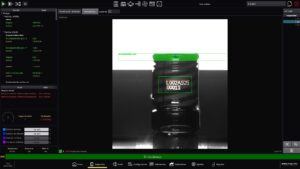
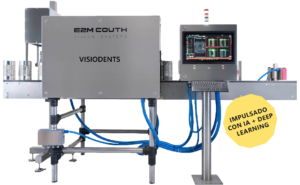
One of the most important aspects in quality control is container and label inspection. Artificial vision systems can verify that the labels are properly placed and are legible, and that the containers are properly sealed. E2M COUTH’S inspection solutions for the pharmaceutical sector include Visiocrimping, a solution that uses computer vision technology and advanced algorithms to identify defects in vials. These defects can include crimping, scratches, absence/presence of stopper, presence, identification, and improper placement of operculum, capsule defects, and verification of batch marks.
This trait is essential to avoid costly and potentially dangerous errors, such as incorrect labelling for medications.

Detection of contaminants
Another critical area where artificial vision is making a difference is in the detection of contaminants. Advanced systems can identify foreign particles in pharmaceutical products, which is essential to guarantee the purity and safety of medications. This ability to quickly and precisely detect means that manufacturers can immediately react to any issue, avoiding large costly recalls and protecting consumers.
Traceability for medications: A safer future
Traceability is a vital aspect on the supply chain for the pharmaceutical industry. It guarantees that each medication can be traced from production to end distribution. Artificial vision is a playing a crucial role in improving traceability for medications.
Batch tracking and serialisation
Artificial vision makes it easy to track batches and serialise, ensuring that each medication unit can be tracked all along the supply chain. Artificial vision systems can read and verify bar codes and QR codes on products, providing precise and efficient tracking. This is especially important to comply with international regulations and to fight counterfeit medications.
Integration with management systems
Artificial vision is not only capable of improving traceability but can also easily integrate into your supply chain’s management systems. This provides complete visibility of products in transit, ensuring that manufacturers and distributors can monitor the status and location of the medications in real time. This integration improves operative efficiency and helps to guarantee that products reach their destination in optimum condition.
The future of the pharmaceutical sector with artificial vision
The inclusion of artificial vision in the pharmaceutical sector is still in early stages, but it is already having a very significant impact. As the technology continues to advance, we will most likely see wider adoption and more profound integration in all aspects of manufacturing and distributing pharmaceutical products.
Innovations in artificial vision, such as artificial intelligence and automatic learning, are bringing technology to new degrees of sophistication. These developments allow artificial vision systems to learn and adapt to new conditions, constantly improving their precision and efficiency. In the future, we might see artificial vision systems that not only detect defects, but also predict problems before they occur, providing proactive intervention.

E2M COUTH has artificial vision systems that can make a production line more effective, avoiding typical human errors and making sure your production reaches your customers in perfect condition. Would you like to learn more about the artificial vision solutions we offer? Please contact us. We would be delighted to help you.