
E2M COUTH is a leading innovator in the field of metal can closure inspection, offering cutting-edge technology for quality control in the manufacturing process. As an industry leader, the company specializes in automated can sealing inspection systems, ensuring that metal can seals are secure and meet the highest standards. The importance of maintaining the integrity of these seals cannot be overstated, as faulty closures can lead to product contamination, spoilage, and compromised safety. By using automated can sealing inspectors, E2M COUTH guarantees precision, efficiency, and reliability in every sealed can, protecting both consumers and manufacturers.
The importance of closure integrity in metal cans
In the food industry, maintaining closure integrity in metal cans is essential to ensure safety, quality, and product longevity. A compromised seal can lead to contamination, spoilage, and even health risks. Hence, effective inspection systems are vital to protect both consumers and manufacturers.
Preventing seal failures in metal cans
Seal failures in metal cans can have serious consequences, particularly in the food industry, where freshness and safety are paramount. A compromised seal allows air, moisture, or contaminants to enter the can, leading to spoilage, bacterial growth, and potentially harmful foodborne illnesses. This can result in products being recalled, causing significant financial losses, regulatory penalties, and harm to consumer health.
Moreover, improper sealing can also decrease the shelf life of products, forcing manufacturers to discard expired goods prematurely. To mitigate these risks, businesses must implement thorough metal packaging inspection processes, ensuring that sealing quality control is consistently maintained. With automated inspection systems in place, manufacturers can detect any sealing defects before products reach the market, ensuring that each can is properly sealed and safe for consumption.
Impact on brand and consumer trust
Poor can sealing can severely damage a brand’s reputation, especially in the food industry. Consumers rely on the integrity of metal can seals to guarantee product freshness and safety. When seals fail, it not only compromises the product’s quality but also erodes consumer trust.
A failure in the sealing process could result in contaminated or spoiled products, leading to negative reviews, public backlash, and even legal issues. This damage to brand reputation can be hard to recover from, as consumers may opt for competitors who they believe offer safer, more reliable products. Implementing a robust metal can sealing inspection system can prevent such issues and protect both the brand’s image and consumer confidence. Regular and thorough inspection assures consumers that the products they purchase are of the highest quality, reinforcing loyalty and fostering trust in the brand.
How the metal can Closure inspector works
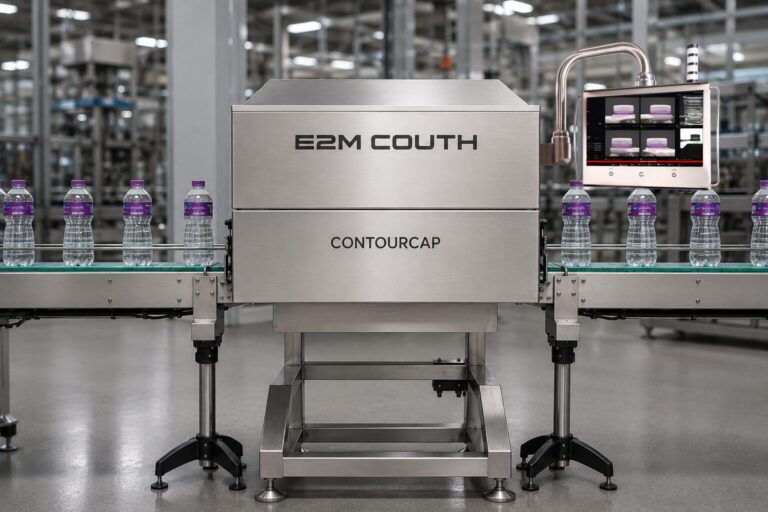
E2M COUTH’s automated systems ensure the integrity of metal can closures through advanced inspection technologies. These systems detect defects, ensuring proper sealing during production, reducing waste, and preventing contamination, ultimately improving quality control in the manufacturing process.
Artificial vision technology for closure inspection
Artificial vision technology plays a critical role in E2M COUTH’s vision inspection system for metal cans. This system uses high-resolution cameras and sophisticated algorithms to analyze every can closure in real time. By capturing detailed images of each closure, the system can identify even the smallest defects, such as dents, misalignments, or improper sealing, with remarkable precision.
The technology mimics human vision but is far more consistent and accurate, enabling rapid detection of flaws that might otherwise go unnoticed. Once a defect is identified, the system signals an alert, allowing operators to immediately remove defective cans from the production line. This prevents contaminated or improperly sealed cans from reaching the market, ensuring that only products meeting the highest quality standards are packaged. Additionally, artificial vision systems can be calibrated to detect specific types of defects, making them highly versatile and adaptable to different production environments.
Easy integration with existing production lines
One of the standout features of E2M COUTH’s automated can sealing inspector is its ability to integrate effortlessly into existing production lines. Manufacturers can implement the system without requiring major changes to their current setup. This seamless integration ensures minimal disruption to ongoing production, enabling businesses to enhance quality control without compromising productivity.
The automated system is designed for ease of use, with user-friendly interfaces that allow operators to quickly monitor and adjust inspection parameters. It works alongside existing equipment, such as conveyors and can filling systems, without interfering with the flow of production. The flexibility of the system also means that it can be adapted to different production speeds and can handle varying product sizes. By incorporating this advanced technology, manufacturers can improve their sealing processes, increase production efficiency, and maintain high standards of product quality without significant operational downtime.
Benefits of using a metal can closure inspector
Automated inspection systems in metal can sealing processes offer numerous advantages. These systems ensure that every can meets stringent quality control standards, reducing defects, boosting production efficiency, and enhancing overall food safety.
Ensures a perfect seal in every can
A primary benefit of using a metal can closure inspection system is the guarantee of a perfect seal in every can. E2M COUTH’s automated systems monitor each closure with exceptional precision, detecting any flaws, misalignments, or imperfections that could compromise the seal. By identifying issues before they become widespread, these systems ensure that only cans with flawless seals proceed to the next stages of production.
This continuous inspection process means that each can is subjected to real-time scrutiny, which prevents defects from slipping through the cracks. This level of vigilance ensures that the final product maintains a high standard of quality, reducing the likelihood of customer complaints or recalls.
With metal can closure inspection integrated into production, manufacturers can confidently assure consumers that their products are sealed properly, preserving both the freshness and safety of the contents. This consistency in sealing enhances customer satisfaction and supports a reputation for excellence in the marketplace.

Reduces human errors and improve efficiency
Automated can sealing inspectors significantly reduce reliance on human labor, which not only minimizes errors but also boosts overall production efficiency. In traditional manual inspections, human workers may overlook subtle flaws or fail to catch defects in real time. However, an automated system performs continuous and precise inspections without fatigue, ensuring consistent, error-free results.
By automating the inspection process, manufacturers can streamline operations, reducing the need for manual checks and the potential for human error. This leads to a smoother production flow and faster turnaround times. Operators are also freed from the time-consuming task of inspecting every can, allowing them to focus on other important aspects of the production process. The result is higher efficiency, reduced costs, and greater scalability. Automated can sealing inspectors improve overall productivity, ensuring that more products are inspected and processed without compromising quality.
Enhances food safety and final product integrity
Food safety is of utmost importance in the manufacturing process, and a metal can closure inspector plays a critical role in ensuring that sealed cans are hygienic and properly closed. A defective seal can lead to contamination, spoilage, or even foodborne illnesses, posing significant health risks to consumers. By maintaining strict can sealing quality control, automated inspection systems ensure that each can is properly sealed before leaving the production line.
With automated inspection, manufacturers can detect and remove cans with improper seals, preventing the release of unsafe or compromised products into the market. The system helps to maintain the integrity of the final product by ensuring that no air, bacteria, or contaminants can penetrate the can. This guarantees that the food inside remains fresh, safe, and hygienic, enhancing both consumer safety and product shelf life. By prioritizing food safety, automated can sealing inspectors help safeguard public health and protect the brand from potential legal or reputational damage.
How automated inspection improves productivity
Automation in the metal can sealing inspection process has a direct and positive impact on production speed. By streamlining quality checks, businesses can increase productivity while maintaining high standards of quality control, ensuring that every can meets the required safety and sealing standards.
Increases speed without compromising quality
One of the major advantages of implementing a vision inspection system for metal cans is the ability to increase inspection speed without sacrificing quality. Traditional manual inspection methods are time-consuming, often requiring workers to individually check each can, which can slow down the entire production line. Automated systems, on the other hand, operate continuously, inspecting hundreds or even thousands of cans per minute with unmatched precision.
Despite the increased speed, these systems maintain high-quality standards by performing detailed analyses of every can closure. Advanced image processing and artificial intelligence algorithms enable the system to detect even the smallest defects, ensuring that only perfectly sealed cans are approved. This combination of speed and precision ensures that production processes are faster without compromising the quality of the final product. Automation in inspection allows manufacturers to scale up production while ensuring each can meet the highest standards, leading to both increased efficiency and consistent product quality.
Simple integration with existing production lines
A key benefit of the metal can sealing inspection system is its seamless integration with existing production lines. Many manufacturers hesitate to adopt new technologies because of the disruption they fear it may cause to their established processes. However, the automated inspection system is designed to work harmoniously with current equipment, making integration straightforward and hassle-free.
The system can be easily incorporated into production lines without requiring major adjustments or costly overhauls. It is compatible with various conveyor systems, canning equipment, and quality control setups already in place. Once installed, the system operates independently, performing continuous inspections without interfering with the speed or flow of the production process.
This simple integration allows businesses to enhance their quality control measures quickly and efficiently, improving overall production without downtime or major disruptions. By streamlining the inspection process, manufacturers can achieve greater output, while ensuring that quality remains a top priority.
Applications of the metal can closure inspector in the food industry
E2M COUTH’s automated metal can closure inspection system offers versatility, ensuring that food manufacturers meet the highest quality and safety standards across various can types and applications.
Suitable for all types of metal cans
The system is designed to perform metal packaging inspection across a wide range of metal can types. Whether for small beverage cans or larger food containers, the automated inspection system adapts to the unique sealing requirements of different can sizes. This ensures that every can, regardless of its dimensions, receives thorough and accurate inspection for perfect seal integrity, preventing any defects from reaching the consumer.
Compliance with food safety standards and regulations
E2M COUTH’s can sealing quality control system ensures strict adherence to food safety standards and industry regulations. By providing reliable, consistent inspections of can closures, the system helps manufacturers comply with safety guidelines, minimizing the risk of contamination and spoilage. This guarantees that all sealed cans are hygienic, properly sealed, and meet the safety requirements set by regulatory bodies, safeguarding both consumers and brands from potential risks.

Why choose E2M COUTH for metal can closure inspection
E2M COUTH’s automated metal can closure inspection system, Visiocanend, stands at the forefront of innovation in the food industry. By ensuring flawless seal integrity in every can, the system helps manufacturers maintain high standards of quality control, reduce human errors, and improve productivity.
With its versatility in handling various can types, compliance with food safety regulations, and seamless integration into existing production lines, Visiocanend guarantees efficiency without compromising quality. Implementing this advanced inspection technology helps safeguard product safety, protect brand reputation, and foster consumer trust.
If you’re interested in learning more about how Visiocanend can transform your production line, E2M COUTH is here to help. Reach out to us today for further information or to schedule a demo. Experience firsthand how our advanced automated metal can closure inspection systems can elevate your quality control processes. Contact us now to take the next step towards enhanced efficiency and product safety!