In any manufacturing environment, quality is not merely a goal, but a factor directly linked to operational efficiency and profitability.
Non-quality costs—such as rejects, rework, production line downtime, or customer complaints—are not usually associated with major failures, but rather with minor deviations that are not detected in time. In many cases, these deviations relate to the product’s shape, profile, or integrity.
Improving quality on production lines therefore involves enhancing detection capabilities at the moment the error is identified, not when it is already too late.
The source of non-quality costs
The cost of non-quality does not appear in a single phase of the process. It builds up progressively as an error moves down the line undetected.
Among the most common impacts:
- Accumulation of defective products
- Increased costs due to defective materials
- Interruptions in automated processes on production lines
- Deviations affecting subsequent phases such as packaging or palletizing
- Incidents and dissatisfied customers
The key lies not only in detecting the error, but in preventing the process from continuously generating out-of-tolerance products.
Limitations of traditional controls
On many production lines, quality control continues to rely on:
- Manual inspections
- Sampling checks
- Verifications in final stages
This approach has structural limitations:
- It does not guarantee the detection of 100% of deviations
- It introduces variability depending on the operator
- It does not allow for real-time action
- It detects the problem when the impact is already significant
As a result, the system acts as a filter, but not as a process control mechanism.
In-line inspection to optimize results
To effectively reduce the cost of non-quality, it is necessary to integrate systems capable of inspecting each unit during the production process.
In-line inspection allows for:
- Detecting deviations the moment they occur
- Preventing the propagation of errors along the line
- Automatically triggering rejection or alert mechanisms
- Generating continuous information on process behavior
This shift in approach transforms quality into a controlled variable, rather than a post-production verification.
Shape control as a critical quality indicator
In many products, quality is directly related to their geometry: variations in profile, deformations, or deviations in the contour can cause:
- Problems with automation or handling
- Inconsistencies in the final product
- Failures in subsequent assemblies or integrations
These types of defects are not always detected through conventional visual inspections, making it necessary to have a system capable of analyzing the actual shape of the product against a defined template.
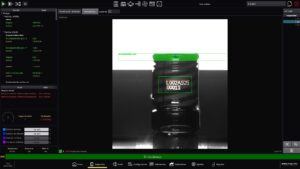
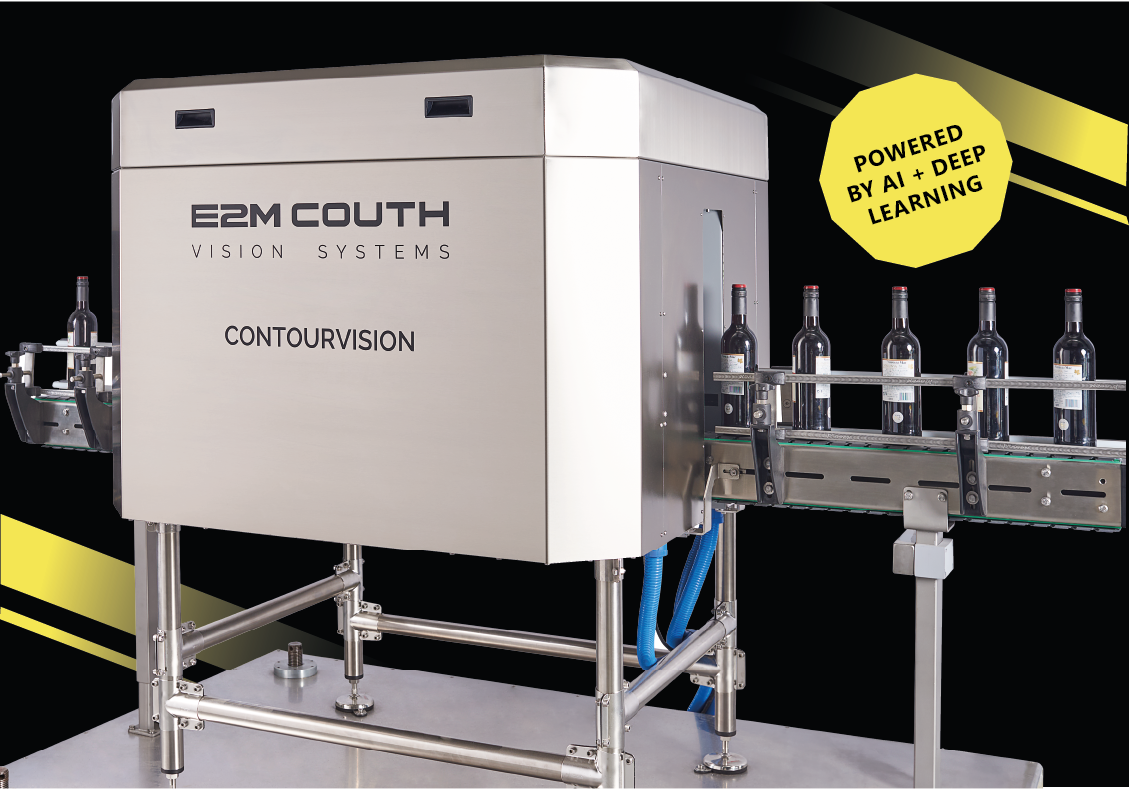
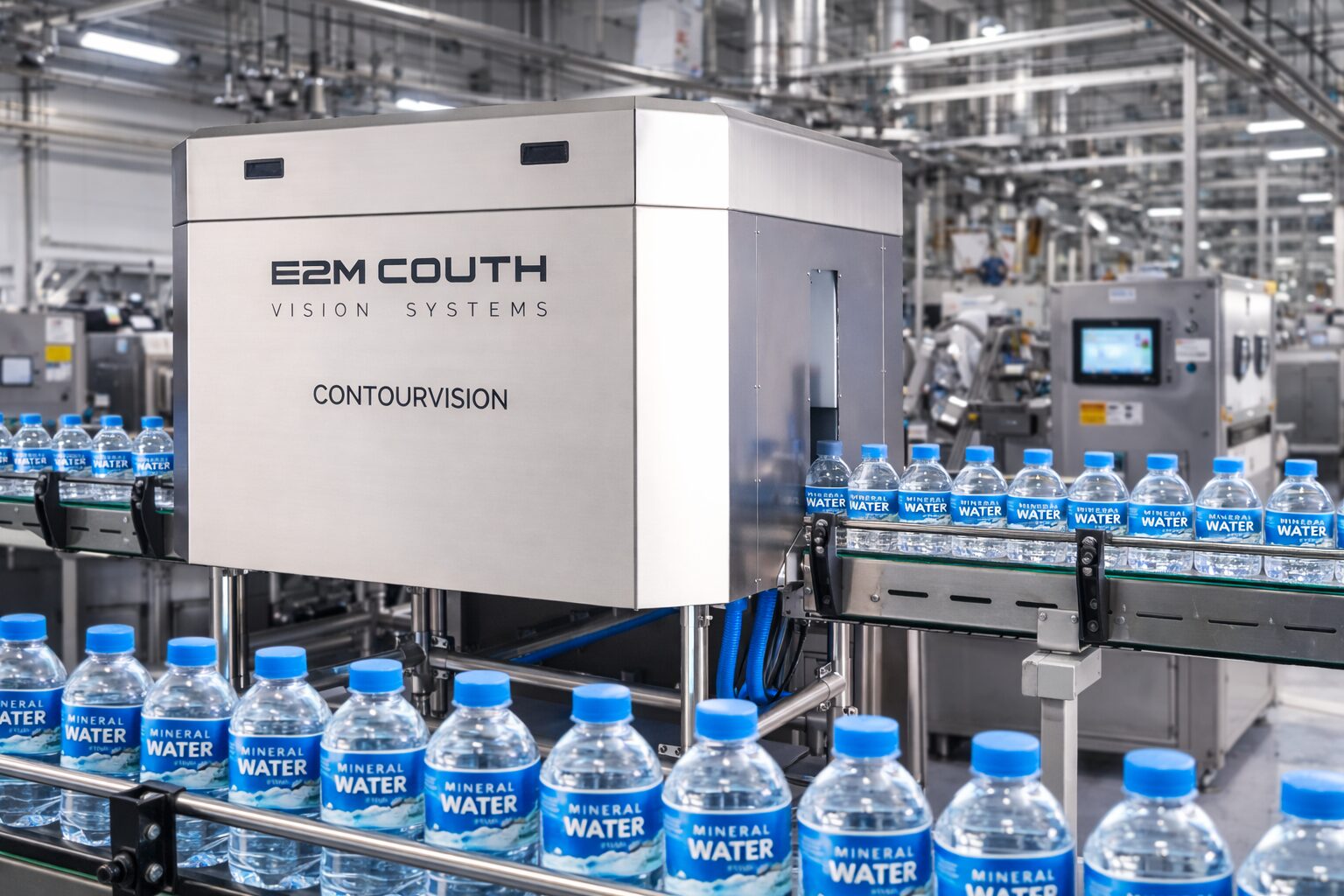
CONTOURVISION: 360° inspection: precise and adaptable to any container
In this context, solutions such as CONTOURVISION allow for a more advanced approach to quality control.
Its approach is based on:
- Real-time 360° inspection of the product’s packaging, geometry, labels, fill level, etc.
- Direct comparison with a reference model
- Automatic detection of out-of-tolerance deviations
This allows each unit to be validated objectively and consistently, eliminating reliance on subjective or partial inspections.
Direct impact on process stability
The incorporation of inspection systems not only allows for the detection of errors but also stabilizes the production process.
Among the main operational benefits:
- Reduced production variability
- Early detection of recurring deviations
- Lower accumulation of defective products
- Improved consistency between batches
The system ceases to act solely as a control and becomes an active element within the process.
A decision with cross-functional impact
Improving quality on production lines is not merely a technical matter. It has direct implications for:
- Operating costs
- Production line efficiency
- Reliability of the final product
- Customer relations
Integrating advanced inspection systems allows these aspects to be addressed in a structured manner, reducing reliance on human checks.
Reducing the cost of non-quality does not involve increasing checks at the end of the process, but rather improving detection and control capabilities at the source.
Inspection on production lines—and in particular the precise control of product shape, labeling, caps, etc.—enables progress toward a more stable, predictable, and efficient production model.
If you are looking for ways to improve the quality of your production line and reduce the impact of deviations on your operating costs, the first step is to analyze the process from the perspective of control and early error detection.
At E2M COUTH, we have industrial inspection specialists who can help you evaluate your application, identify critical points, and define the most appropriate control approach, based on your quality, production, and traceability requirements.
Because every process is different, and the solution must be tailored to the reality of your production. Contact us!